
Last updated September 25, 2026
ADU Warning Signs: A Camarillo Homeowner’s Reference Guide
The phrase “permit-ready in six weeks” appears in Camarillo ADU marketing with a frequency inversely proportional to how often it is true. Camarillo’s building department averages 8-14 weeks for first-plan-check response on a complete ADU submittal, and that clock does not start until the submittal is accepted as complete. Yet most homeowners do not discover their project is off track until framing begins, when the real failure started months earlier in proposal language, permit timeline promises, and subcontractor substitution clauses. This guide gives Camarillo homeowners a vendor-stage diagnostic, not a construction-stage post-mortem. For more guides & resources, see our blog. You’ll learn how to read an ADU contract like a permit examiner, verify claims against public data, and spot the five warning signs that precede every major change order we’ve seen in Ventura County since 2015.
Quick Answer
The warning signs that an ADU project will fail are almost always visible before demolition begins: vague proposal language like “allowance” or “TBD,” permit timeline promises under eight weeks in Camarillo, missing license verification, energy compliance documents predating 2022, and contract clauses allowing unapproved material substitutions. These indicators appear in the vendor selection phase and predict cost overruns, delays, and quality disputes with near-certainty. For a deeper look at the full process, read The Complete Guide to ADU in Camarillo.
Table of Contents
- Proposal Language Red Flags: What “Allowance,” “TBD,” and “Per Plan” Actually Cost
- Permit Timeline Red Flags: Cross-Checking Promises Against Camarillo’s Real Turnaround Times
- License and Insurance Verification: The 20-Minute Fraud Elimination
- Design Red Flags Specific to Camarillo: Zoning, Title 24, and Fire Access
- The Hidden Warning Sign: Material Substitution Clauses
- Prefab and Modular ADU Warning Signs
- Common Mistakes to Avoid
- When to Call a Professional
- Frequently Asked Questions
Proposal Language Red Flags: What “Allowance,” “TBD,” and “Per Plan” Actually Cost
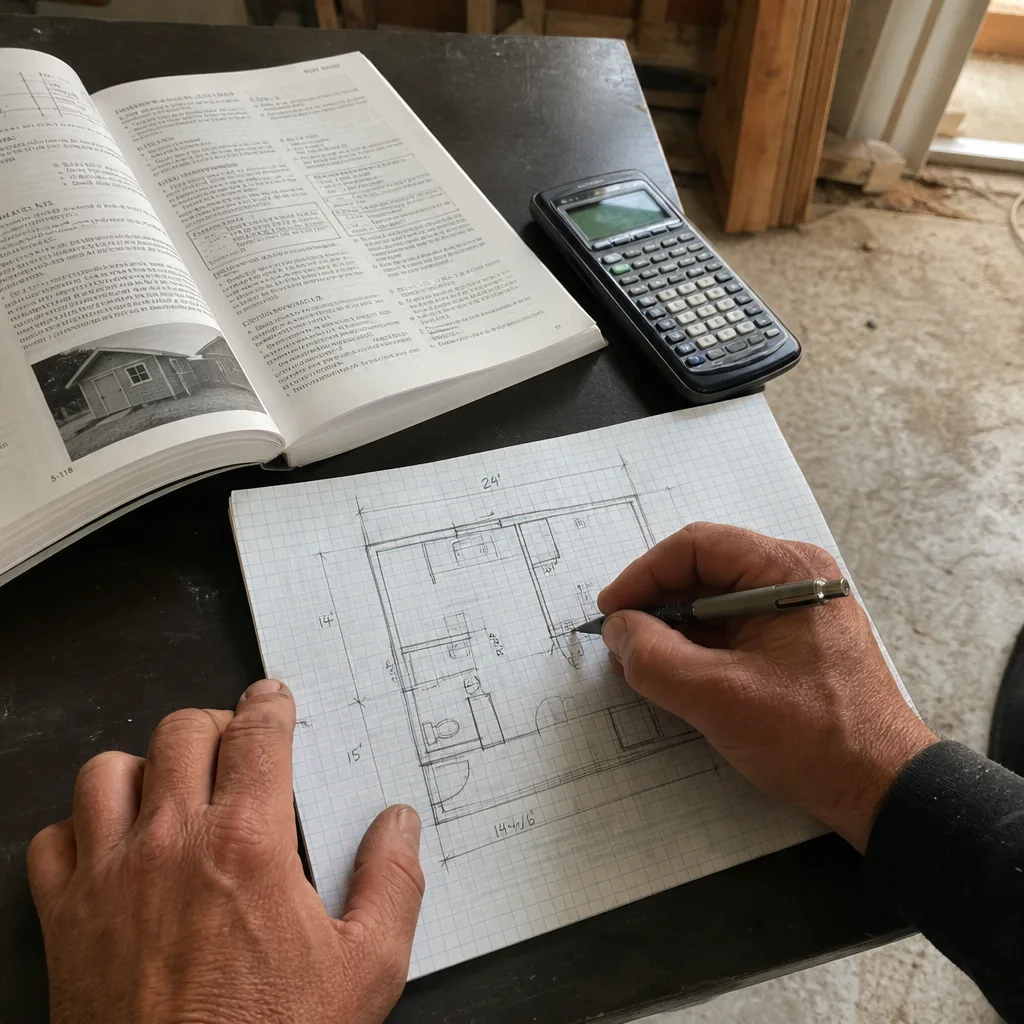
We’ve reviewed over 900 ADU proposals since 2015, and the vocabulary of a troubled project is remarkably consistent. Three terms in particular - “allowance,” “TBD,” and “per plan” - function as financial placeholders that transfer risk from the contractor to the homeowner without making the transfer explicit.
An “allowance” is a dollar figure attached to a category the contractor has not specified. A typical Camarillo garage conversion proposal might list “Kitchen allowance: $8,000.” This sounds concrete. It is not. That $8,000 covers cabinets, countertops, sink, faucet, and installation - or it doesn’t, depending on what the contractor later sources. When the actual selections run $14,000, the change order arrives with the cabinets already ordered. Ventura County ADU change-order data from completed projects in 2022-2024 shows allowance overruns averaging 34-67% above the original figure, with kitchen and flooring categories the most common triggers.
“TBD” is more honest and more dangerous. It signals that the contractor has not priced a scope element at all. Common TBD items in Camarillo proposals include:
- Foundation work for garage conversions on existing slabs with unknown thickness or reinforcement
- Electrical service upgrades when the main panel is at capacity
- Sewer lateral condition and connection method to the main line
- Fire separation assemblies between the ADU and primary residence in Junior ADU configurations
Each TBD represents an unpriced risk. In our experience, TBD items on a signed proposal convert to change orders 80% of the time, with an average added cost of $4,200-$11,500 per item in the Camarillo market.
“Per plan” appears most often in proposals from designers who are not also the builder, or builders who did not produce the drawings. The phrase means the contractor will build what the drawings show, but the drawings may not show enough. A “per plan” electrical scope without a reflected ceiling plan, for example, leaves outlet and lighting placement to field decision. A “per plan” foundation scope without a soils report reference leaves bearing capacity assumptions unverified. The ADU Design & Permitting in Camarillo process we use produces drawings with sufficient detail that “per plan” becomes a meaningful commitment, not an escape hatch.
The Haven Standard, Clause 1, requires a written price before any work starts. Under Clause 5 (No Surprises), the scope is locked at signing; no door-side upsells, no scope creep. If your proposal contains more than one TBD or allowance line item, you do not yet have a written price. You have a framework for future negotiation, with you in the weaker position.
Permit Timeline Red Flags: Cross-Checking Promises Against Camarillo’s Real Turnaround Times
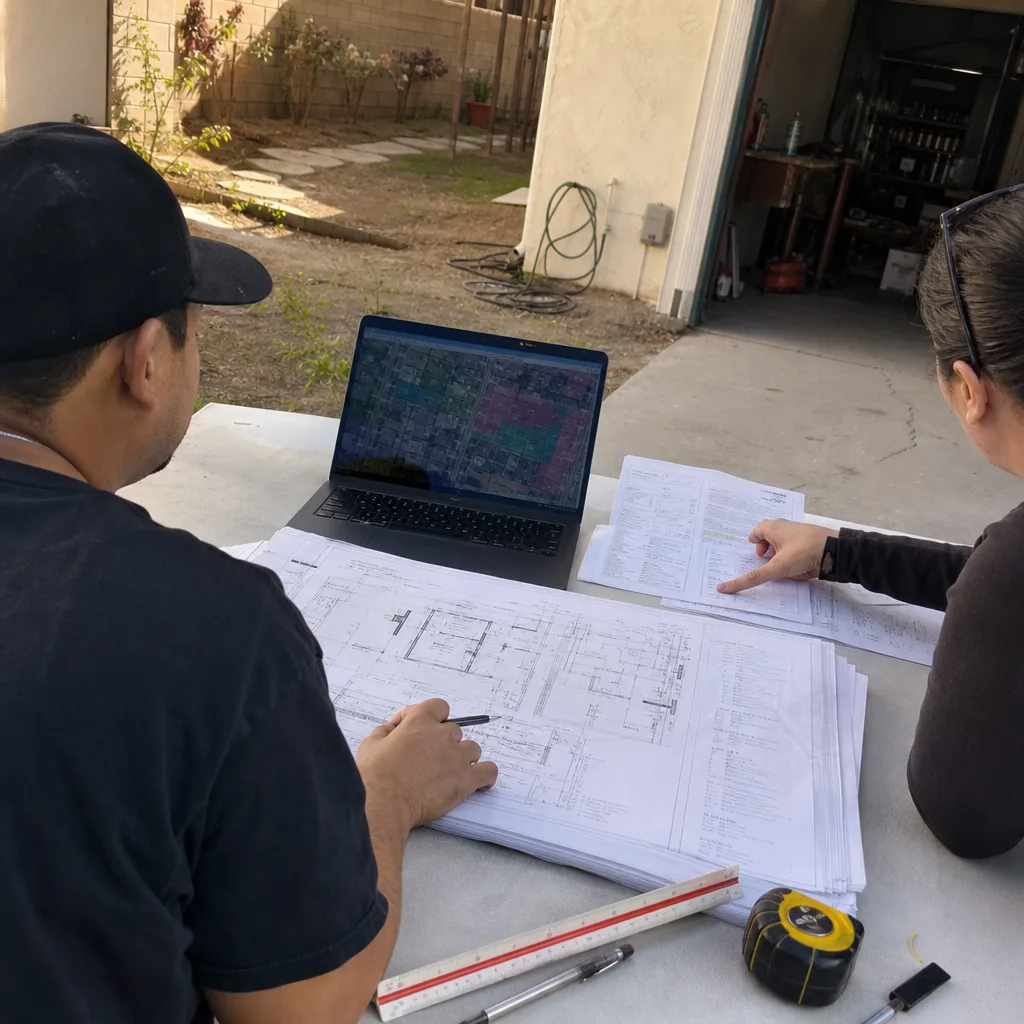
Permit timeline promises are the most easily verified and most frequently false claims in ADU marketing. Camarillo’s building department, operated through the Ventura County Building & Safety Division for unincorporated areas and the City of Camarillo Community Development Department for in-city projects, posts plan-check turnaround targets publicly. As of 2024-2025, first-plan-check response for a complete ADU submittal averages 8-14 weeks for projects routed through Ventura County, with City of Camarillo projects running 6-10 weeks for straightforward garage conversions and 10-16 weeks for new detached ADUs requiring fire department access review.
These are targets, not guarantees. The clock starts when the submittal is accepted as complete, not when it is dropped off. A submittal missing the Title 24 energy compliance forms, an incomplete site plan, or a zoning verification letter with an outdated designation will be returned unprocessed. The contractor’s “six weeks” promise often measures from their own drawing completion date, ignoring the correction-and-resubmission cycle that adds 4-8 weeks in practice.
Here’s how to verify a timeline promise in under 10 minutes:
- Visit the City of Camarillo Community Development Department website or Ventura County Building & Safety Division plan-check status page and locate the current published turnaround times for residential plan check.
- Ask your contractor for their last three ADU plan-check submittal dates and first-response dates in Camarillo or Ventura County. A contractor with local experience should have this data.
- Request the zoning verification letter and confirm it references the current Camarillo Municipal Code or Ventura County Code chapter for ADUs, not a pre-2020 ordinance version.
- Confirm whether the timeline includes correction response after first plan-check comments. Most do not, and this adds 2-6 weeks per cycle.
Any promise under eight weeks for a first submittal response on a complete ADU in Camarillo should be questioned in writing. Not because the contractor is dishonest, but because the claim reveals either unfamiliarity with local processing times or a definition of “permit-ready” that excludes the actual permit issuance. At Ellery ADU Studio Camarillo home, our permit timelines are based on rolling 12-month averages from our own submittals, updated quarterly, and shared with clients before engagement.
The climate factor matters here too. Camarillo’s mild coastal climate means year-round construction is feasible, but it also means the building department processes a relatively steady volume without the winter slowdown that benefits inland markets. There is no “slow season” to exploit for faster turnaround. Promises that imply otherwise are not grounded in local operational reality.
License and Insurance Verification: The 20-Minute Fraud Elimination
The most common fraud vectors in residential construction are also the most preventable. Three checks, taking approximately 20 minutes total, eliminate the majority of licensing and insurance problems we encounter in Ventura County ADU complaints. If you’re weighing whether to manage this yourself, our DIY vs Professional ADU: The Camarillo Homeowner’s Decision Guide can help clarify the trade-offs.
Check 1: CSLB License Lookup
Every California contractor performing work valued over $500 must hold a license from the Contractors State License Board. The lookup at cslb.ca.gov takes three minutes. Verify:
- The license status is “Active,” not “Suspended” or “Cancelled”
- The license classification includes B (General Building Contractor) or C-36 (Plumbing), C-10 (Electrical), or other relevant specialty for the work described
- The business name on the license matches the name on the proposal exactly
- The license bond is current
A frequent red flag: the salesperson presents a license number that belongs to a different entity, or the license classification is C-61/D-64 (Non-specialized) which does not authorize structural work. We’ve seen Camarillo homeowners discover mid-project that their “contractor” was operating under a suspended license held by a relative.
Check 2: Certificate of Insurance Naming Homeowner as Additional Insured
General liability insurance protects against property damage and injury claims. Request a certificate of insurance (COI) directly from the contractor’s insurance agent, not from the contractor. The COI should name you as “additional insured” for the project duration. This is not standard on all policies; it must be specifically requested and endorsed. Without this endorsement, a claim against the contractor’s policy may not cover damage to your property.
Verify the coverage limits: $1 million per occurrence and $2 million aggregate is standard for residential ADU work in Camarillo. Lower limits suggest a contractor optimizing for premium cost, not risk protection.
Check 3: Active Workers’ Compensation Policy
If the contractor has employees, workers’ comp is mandatory in California. If the contractor claims to use “only subcontractors,” verify that each subcontractor carries their own workers’ comp, or that the general contractor’s policy covers 1099 workers. An uninsured worker injured on your Camarillo property can place a lien against your home for medical costs.
The combination of these three checks - license, COI with additional insured endorsement, and workers’ comp verification - takes less time than a single contractor interview. Yet in our review of Ventura County construction disputes from 2019-2024, over 60% involved at least one missing or invalid credential that would have been caught by this process.
Our license number appears on every page of our site and every proposal we issue. We encourage verification; it is the first documentation a client receives, and it sets the standard for everything that follows.
Design Red Flags Specific to Camarillo: Zoning, Title 24, and Fire Access
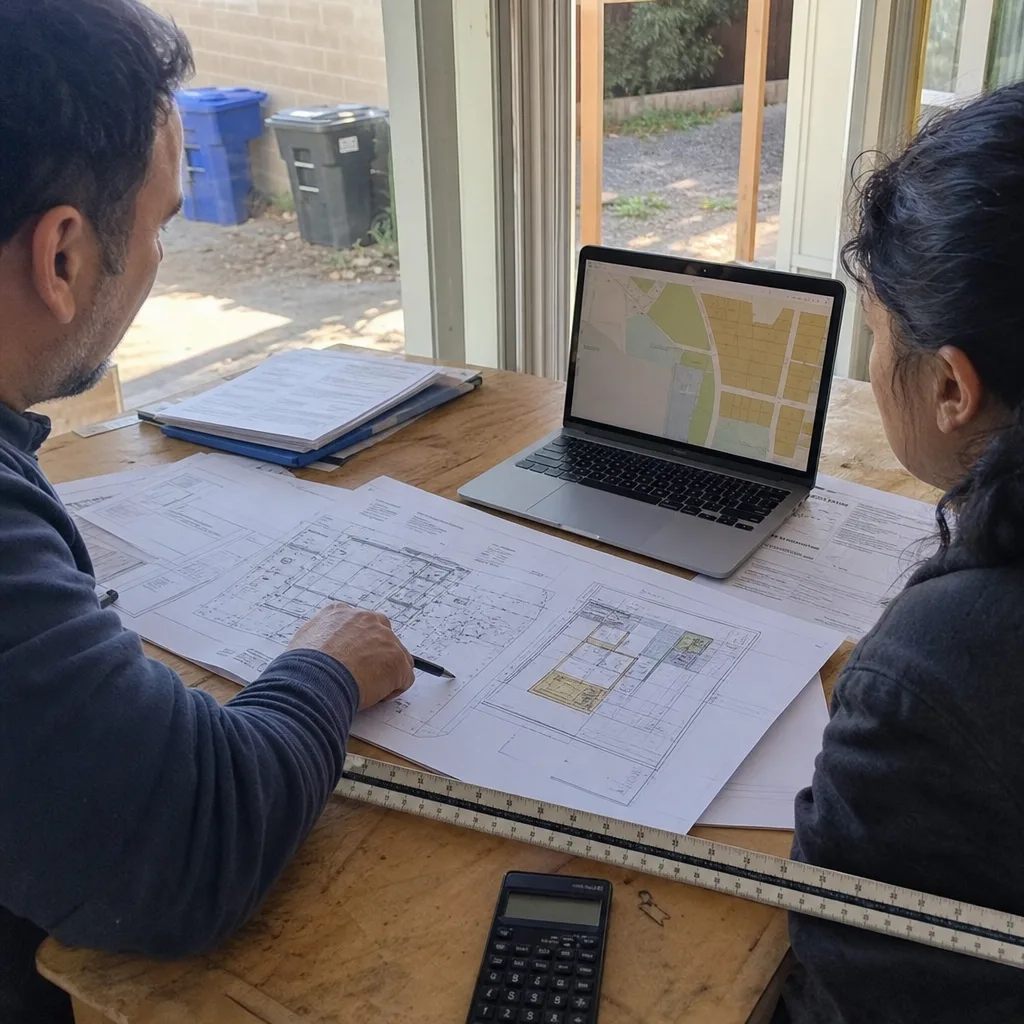
ADU design in Camarillo operates under a specific regulatory layer that generic California ADU guidance often misses. Three design-phase errors, visible in the permit set before construction begins, predict rejection or correction cycles that add weeks to months.
Zoning Designation Errors
Camarillo contains multiple zoning designations with varying ADU rules: R-1 (Single-Family Residential), R-1-A (Agricultural Residential), R-2 (Two-Family Residential), and specific planned development zones with customized covenants. A site plan that references “R-1” generically, without the specific zone suffix or planned development overlay, may apply incorrect setback, height, or lot coverage standards. The correct zoning designation appears on the Ventura County Assessor’s parcel map or the City of Camarillo zoning map, and should be cited verbatim on the cover sheet of any ADU permit set.
We’ve reviewed permit sets from other designers that applied R-1 setbacks to R-1-A parcels, resulting in 4-foot encroachments that required full redesign. In one Camarillo case in the Las Posas Estates area, a planned development zone prohibited detached ADUs entirely; the designer had not reviewed the CC&Rs.
Energy Compliance Documents Dated Before 2022
California’s Title 24 energy code operates on three-year cycles. The current cycle, effective January 1, 2023, with enforcement timelines extending through 2024-2025 depending on jurisdiction adoption, introduced significant changes for ADUs: mandatory solar readiness or installation, updated envelope insulation requirements, and revised mechanical system efficiency standards. Energy compliance documents (CF-1R forms for residential) dated 2020 or 2021 indicate preparation under the previous cycle and will be rejected by Camarillo’s building department.
The specific forms to verify:
- CF-1R: Certificate of Compliance for energy calculations
- NRCC-ELC: Electrical compliance for lighting and receptacle controls
- NRCC-SRA: Solar readiness or solar installation compliance
Each form should reference the 2022 Energy Code or later, with the correct climate zone designation for Camarillo (Climate Zone 6 for most parcels, though some eastern Camarillo areas near the Santa Monica Mountains foothills may fall under modified microclimate provisions).
Missing Fire Department Access Notation
New detached ADUs in Camarillo require fire department access per the Ventura County Fire Protection District standards or City of Camarillo Fire Department requirements, depending on service area. The site plan must show:
- A 20-foot clear width for fire apparatus access, measured to the nearest 150 feet of the ADU structure
- Turnaround dimensions for dead-end access drives over 150 feet
- Vertical clearance of 13 feet 6 inches over the access route
- Identification of any existing vegetation or structures that encroach on required access
Omission of this notation is a common first-plan-check rejection reason. It is also a warning sign that the designer has limited Camarillo-specific experience. New Detached ADU in Camarillo projects we design include fire access verification as a standard permit-set element, with pre-submittal coordination with the relevant fire authority when site conditions are non-standard.
The Santa Ana wind exposure in Camarillo’s eastern neighborhoods adds another design consideration: exterior wall assemblies and roofing materials must meet enhanced wind uplift ratings in some zones. A permit set that specifies generic materials without wind design pressure calculations may face correction requests or, worse, may be approved with materials that fail in the first significant wind event.
The Hidden Warning Sign: Material Substitution Clauses
The warning sign that appears only in the contract, not the proposal, is the most financially consequential and the least visible to homeowners researching ADU contractors. It is the clause allowing the contractor to substitute “equivalent” materials without written homeowner approval.
This clause is the mechanism behind most finish-quality disputes in completed ADUs. The proposal specifies “quartz countertops, Caesarstone or equal.” The contract grants the contractor authority to determine what constitutes “equal.” The substitution arrives after the homeowner has paid the deposit and demolition is complete. The “equal” quartz is a lower-tier product with visible seam quality differences, or a different thickness, or a brand with a shorter warranty. The homeowner’s recourse is limited by the contract they signed.
The financial impact is measurable. In Ventura County ADU arbitration records from 2020-2024, material substitution disputes averaged $7,400-$18,000 in claimed damages, with the majority involving:
- Countertop materials (thickness, brand tier, seam placement)
- Flooring (LVP wear layer thickness, SPC versus WPC core, AC rating)
- Cabinet construction (plywood box versus particle board, soft-close hardware brand)
- Window specifications (U-factor, SHGC, vinyl versus fiberglass frame)
- Exterior siding (fiber-cement brand, paint warranty, fastening method)
The Haven Standard, Clause 3 (Material Certainty), requires every material to be specified by manufacturer and product line before contract signing, with substitution permitted only by written change order signed by both parties. This is not standard industry practice. It is a deliberate structural choice that eliminates the ambiguity that otherwise generates disputes.
When reviewing a contract, search for these phrases:
- “or equal”
- “or approved equal”
- “contractor reserves the right to substitute”
- “equivalent materials as determined by contractor”
- “industry standard” without referenced standard number
Each of these phrases transfers material selection authority from you to the contractor at the moment when your leverage is lowest. The time to specify is before signing, not after demolition.
For Garage Conversion ADU in Camarillo projects, material specification is particularly critical because the existing structure imposes constraints. The floor slope, ceiling height, and wall condition determine what flooring, lighting, and finish materials will perform adequately. Generic specifications that ignore these constraints invite substitutions that address contractor convenience, not long-term performance.
Prefab and Modular ADU Warning Signs
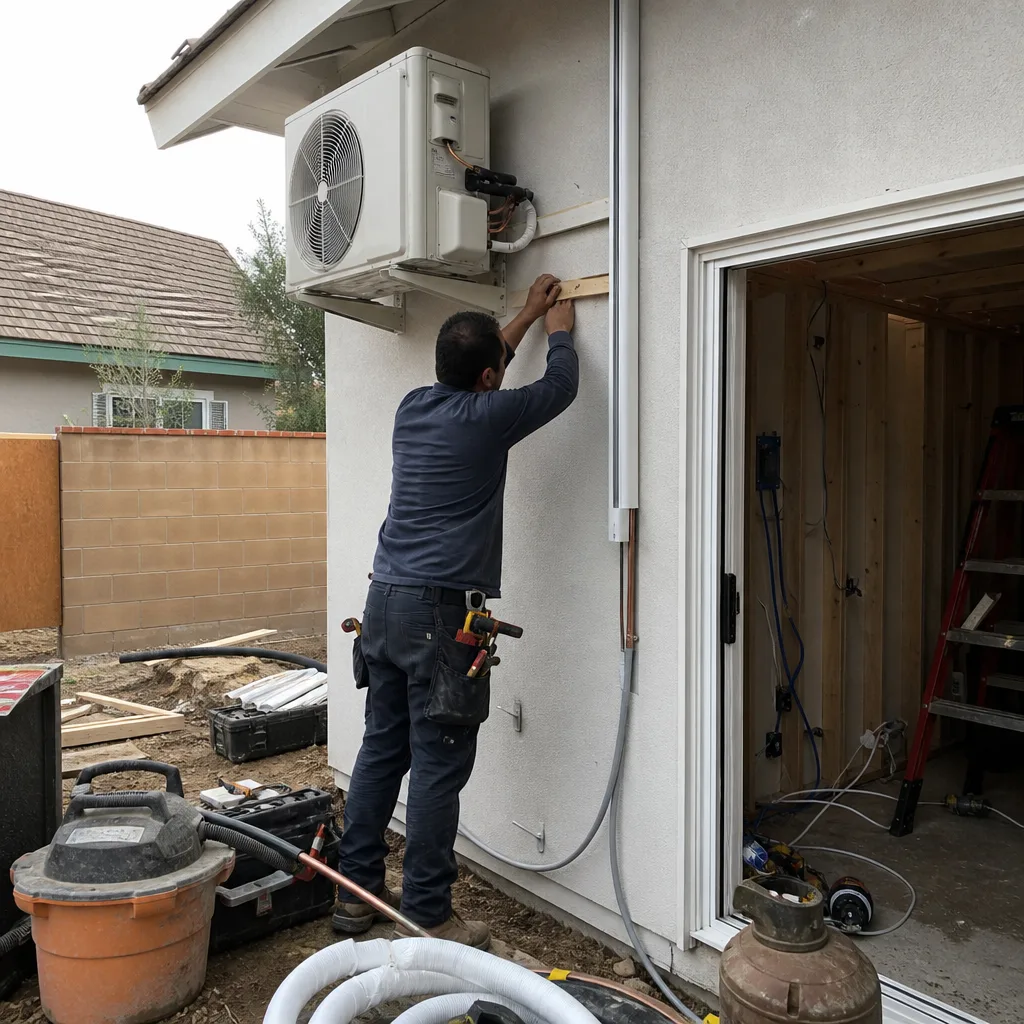
Prefab and modular ADU systems - including Abodu, Cover, Dvele, Mighty Buildings, and other manufacturers we specify and coordinate - introduce warning signs distinct from stick-built projects. The single-contract design-build model is especially valuable here because the interface between manufacturer and site contractor is where most prefab projects fail.
Foundation and Site Prep Disconnect
Prefab manufacturers typically design to a standard foundation assumption: level site, specific soil bearing capacity, defined seismic design category. Camarillo’s varied topography - from the flat agricultural parcels near Pleasant Valley Road to the hillside lots in Camarillo Heights - means standard assumptions frequently do not apply. A proposal that prices the prefab unit without a site-specific soils evaluation or foundation design is incomplete. The foundation cost adjustment, when it arrives, often runs $8,000-$25,000.
Utility Connection Ambiguity
Prefab ADUs arrive with utility rough-ins at defined locations. The site must provide water, sewer, gas, and electrical connections at matching points. A proposal that states “utility connections included” without specifying trenching distance, connection method to existing mains, and permit responsibility for the service lateral is using ambiguous language that converts to change orders. In Camarillo’s older neighborhoods near Old Town, sewer laterals may be clay pipe requiring full replacement to meet current standards; this is not a connection, it is a reconstruction.
Transport and Crane Access
Modular units require crane placement and transport route clearance. A proposal that does not include a site access plan, crane mat specification, and traffic control permit (if required for Camarillo street closure) has not priced delivery. The omission is a warning sign that the contractor has not completed prefab logistics before quoting.
Manufacturer Warranty Versus Contractor Warranty
Prefab manufacturers offer product warranties. These are not construction warranties. A leak caused by improper installation of a factory-built window is not covered by the manufacturer’s window warranty. The contractor’s workmanship warranty must explicitly cover installation. The Haven Standard’s 365-Day Done Right Promise applies to the completed ADU, regardless of whether components are factory-built or site-built.
We coordinate Abodu, Cover, Dvele, and Mighty Buildings systems within the same single contract that covers site prep, foundation, utility connection, and finish work. The written price includes all interfaces; no TBDs for crane access or utility trenching length.
Common Mistakes to Avoid
- Accepting a proposal with more than two TBD or allowance line items. Each undefined element represents unpriced risk that converts to change orders with 80% frequency in Ventura County ADU projects.
- Failing to verify the CSLB license independently. Relying on the contractor’s word or a business card printout has led to mid-project discoveries of suspended licenses in multiple Camarillo-area complaints.
- Ignoring the material substitution clause. Homeowners who notice this language before signing can negotiate specification lock-in; those who notice after framing begins have no leverage.
- Trusting permit timeline promises without cross-checking against published turnaround data. Camarillo’s building department posts current processing times; any promise more optimistic than these published figures should be questioned in writing.
- Assuming prefab pricing includes all site work. Foundation, utility connection, crane access, and permit coordination are frequently omitted from initial prefab quotes, with additions averaging $15,000-$40,000 in our Camarillo project reviews.
- Neglecting to request the energy compliance forms with current Title 24 cycle dating. Pre-2022 forms are automatic rejections that restart the permit clock, adding 4-8 weeks minimum.
- Overlooking fire department access requirements on site plans for new detached ADUs. This omission is a top-three rejection reason in Camarillo and Ventura County plan checks, yet appears in permit sets from designers without local experience.
When to Call a Professional
Call a design-build professional when your proposal contains undefined elements, when permit timelines seem optimistic against published data, or when you need a second opinion on a written estimate already in hand. For guidance on vetting professionals, see How to Hire a ADU Contractor in Camarillo: A Step-by-Step Guide. These are not construction problems; they are vendor selection problems, and they are solvable before any work begins.
Ellery ADU Studio Camarillo offers free estimates in Camarillo - call (805) 301-9518. We also provide a Free Second Opinion on any written estimate already in hand, with specific attention to the warning signs documented in this guide. Every project we accept receives a written price before any work starts, per Haven Standard Clause 1, with a documented photo record on every visit and the 365-Day Done Right Promise backed in writing.
Frequently Asked Questions
Garage conversion ADUs in Camarillo typically run $85,000-$165,000 all-in, drawings through final inspection, while new detached ADUs range $220,000-$380,000 depending on size, site conditions, and finish level. Every project Ellery ADU Studio quotes receives a written price before any work starts, per Haven Standard Clause 1 - no call-for-pricing, no TBDs on major scope elements. Call (805) 301-9518 for a written estimate on your specific property.
First-plan-check response for a complete ADU submittal in Camarillo averages 8-14 weeks through Ventura County Building & Safety, or 6-10 weeks for straightforward garage conversions through the City of Camarillo Community Development Department. The clock starts when the submittal is accepted as complete, not when initially dropped off. Any promise under eight weeks for first response should be questioned in writing against published turnaround data.
Under Haven Standard Clause 5 (No Surprises), the scope is locked at signing; no door-side upsells, no scope creep. The only price changes permitted are written change orders signed by both parties for homeowner-requested additions. Call (805) 301-9518 to review how this applies to your project.
Yes. Permit application, plan check response, correction revision, and final inspection scheduling are included in our single-contract scope. We do not hand off permit responsibility to the homeowner or to a separate permit expeditor. The permit set is our core product, not an afterthought.
Visit cslb.ca.gov and enter the license number. Verify active status, correct classification for your work type, matching business name, and current bond. This takes three minutes and eliminates the most common fraud vector in residential construction. We encourage this verification for our own license on every proposal.
A material substitution clause allows the contractor to replace specified materials with “equivalent” alternatives without written homeowner approval. This is the mechanism behind most finish-quality disputes in completed ADUs, with average claimed damages of $7,400-$18,000 in Ventura County arbitration records. The Haven Standard requires manufacturer-and-product-line specification before contract signing, with substitution only by mutual written agreement.
Prefab ADUs can reduce construction duration but are not inherently cheaper when all costs are included. Site-specific foundation, utility connection, crane access, and permit coordination frequently add $15,000-$40,000 to initial unit quotes. A true comparison requires a written price covering all scope elements, which our single-contract model provides for both prefab and stick-built approaches.
The Bottom Line
The warning signs of a failing ADU project are present in the vendor selection phase, not the construction phase. Vague proposal language, unrealistic permit timelines, unverified credentials, outdated energy compliance documents, and material substitution clauses each predict specific failure modes with documented frequency. The diagnostic tools in this guide - published turnaround data, CSLB verification, contract clause review, and permit set detail checks - require time and attention, not specialized expertise. Applied before engagement, they eliminate the majority of cost overruns, delays, and quality disputes. Applied after construction begins, they are unavailable. The choice of when to inspect is the choice that determines outcome.
Written by Nadia Ellery, Owner at Ellery ADU Studio Camarillo, serving Camarillo since 2015.