
Last updated September 25, 2026
DIY vs Professional ADU: The Camarillo Homeowner’s Decision Guide
California Business and Professions Code Section 7044 lets any homeowner pull their own ADU permit. What most Camarillo owners learn too late: the same statute requires them to sign a disclosure at resale stating they built without a licensed contractor, and to occupy the structure personally for at least one year after completion. In a market where Camarillo median home prices have climbed past $850,000, that disclosure is no longer a footnote. Title companies flag it. Buyers’ agents ask follow-up questions. Lenders scrutinize it during underwriting. This guide walks through what an owner-builder permit actually commits you to, which tasks you can legally self-perform, and where the hidden costs erase the savings you expected. For more context, see our ADU Cost Breakdown: The Camarillo Homeowner’s Reference for 2026.
Quick Answer
Most Camarillo homeowners who consider a DIY ADU underestimate the owner-builder permit’s legal and financial obligations. The owner-builder exemption requires personal occupancy for one year post-completion, mandates a resale disclosure that can complicate financing, and still forces you to hire licensed subcontractors for electrical, plumbing, and HVAC rough-in. When permit correction fees, extended timelines, and resale friction are included, professional design-build typically costs 8-15% more upfront but closes the gap within two years of rental income.
Table of Contents
- What California’s Owner-Builder Permit Actually Requires
- The Resale Disclosure Buyers Will See
- What You Can Legally Self-Perform vs. What You Can’t
- Real Cost Comparison: DIY vs. Professional Design-Build
- Where DIY Is Most Defensible (and Where It Isn’t)
- Camarillo Inspection Failure Rates by Trade
- Common Mistakes to Avoid
- When to Call a Professional
- Frequently Asked Questions
What California’s Owner-Builder Permit Actually Requires
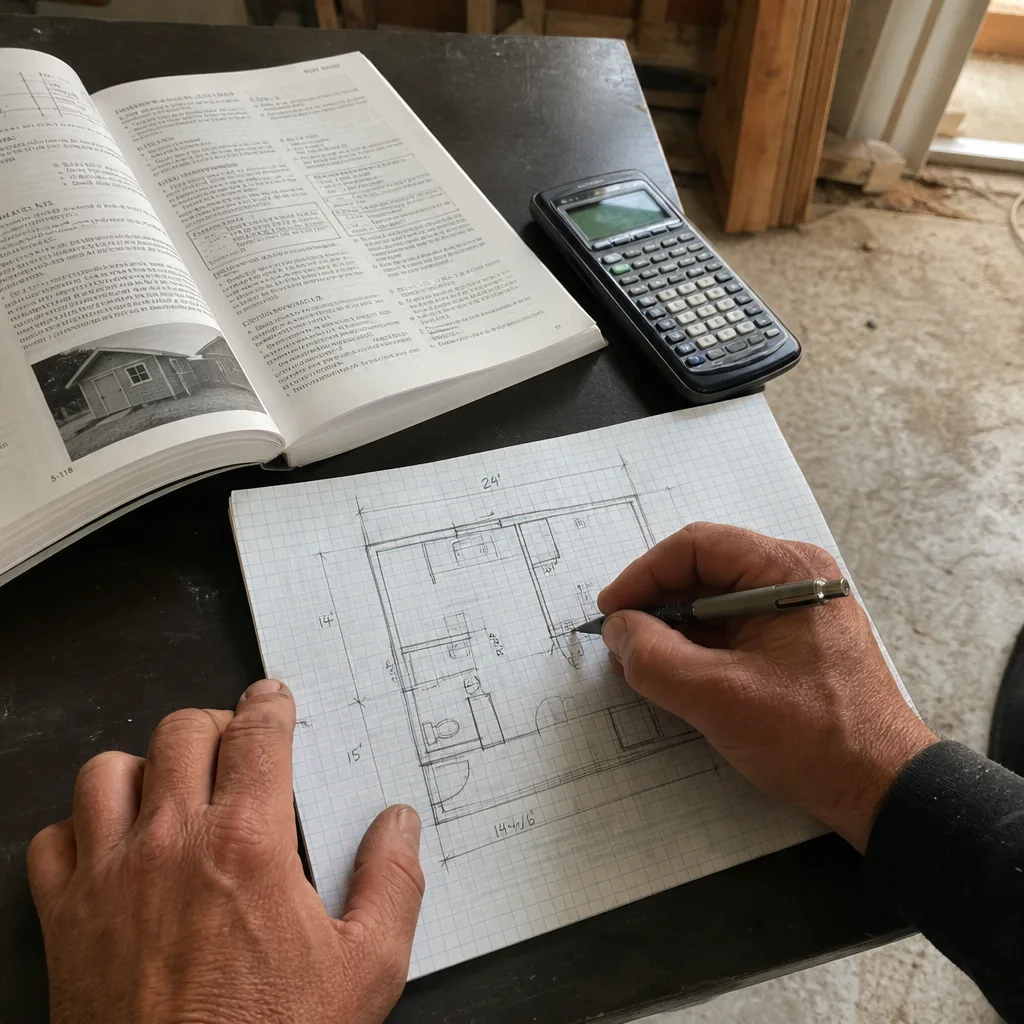
California Business and Professions Code Section 7044 creates the owner-builder exemption. The language seems straightforward: a homeowner can act as their own general contractor on a single-family residence they intend to occupy. For ADUs in Camarillo, three conditions must all be true for the exemption to apply.
Condition one: the property must be your principal residence. This is not a mailing address requirement. The Ventura County Assessor’s records must show you as the owner-occupant. If you’ve claimed a homeowner’s exemption on a rental property elsewhere, that complicates qualification.
Condition two: you must personally occupy the completed ADU for at least 12 months. This is the condition most Camarillo owners miss. The owner-builder statute requires occupancy of the structure you built, not just the main house. If you built a detached ADU in the backyard, you must live in that ADU for one year. If you converted your garage, you must occupy the garage conversion ADU. Renting it immediately upon certificate of occupancy violates the exemption. The City of Camarillo Building Division can, and occasionally does, verify occupancy through utility records or follow-up inspection.
Condition three: you can only use the exemption once every two years. This limits serial developers from exploiting the statute. For most Camarillo homeowners building a single ADU, this is not restrictive. For those considering a garage conversion now and a detached unit later, the timeline matters.
The permit application itself requires a signed affidavit acknowledging these conditions under penalty of perjury. The City of Camarillo attaches this affidavit to the building permit record, where it remains part of the property’s permanent file.
The Resale Disclosure Buyers Will See
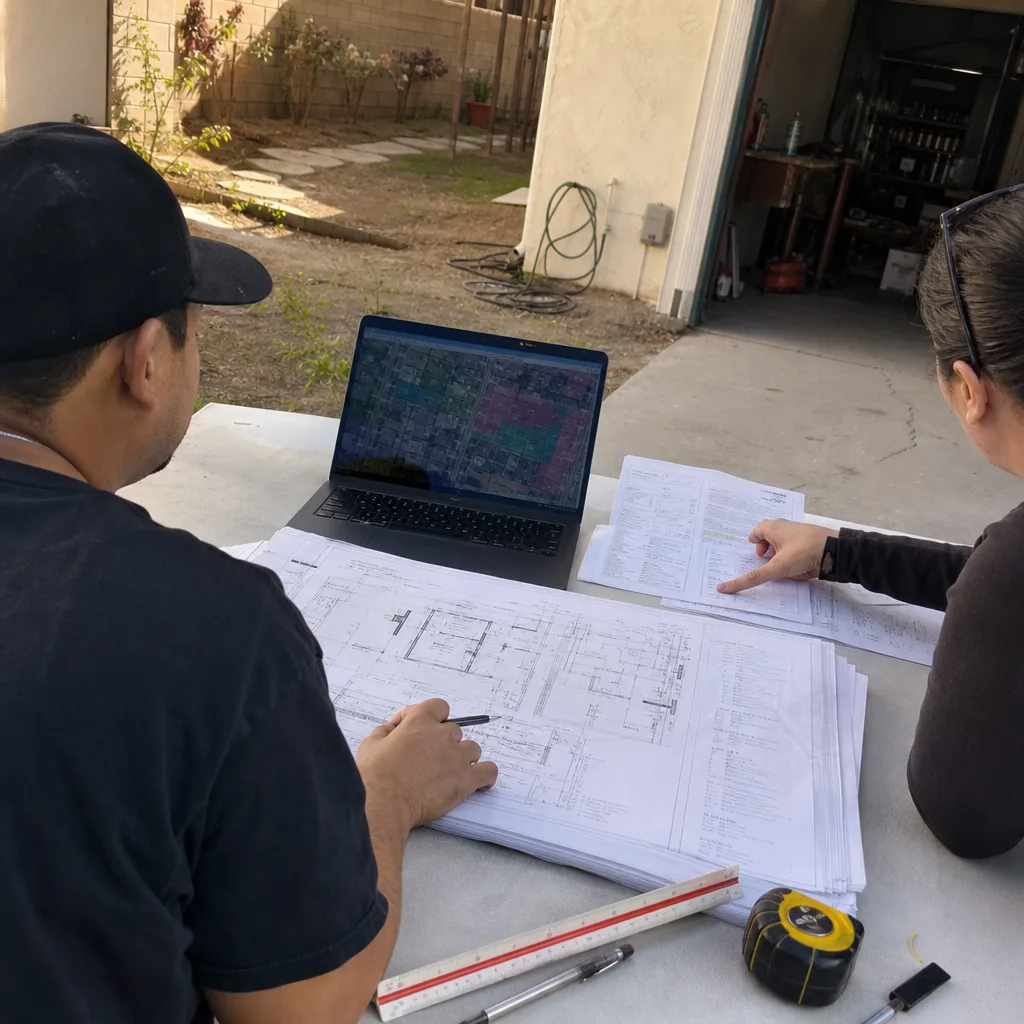
Here’s where the owner-builder decision compounds. California Civil Code Section 1103 requires disclosure of material facts affecting property value. The owner-builder affidavit triggers a specific disclosure form at resale: the Owner-Builder Disclosure Statement.
The form’s language is standardized. It states that the ADU was constructed without a licensed general contractor, that the owner-builder was responsible for all construction means and methods, and that no licensed contractor’s warranty or insurance backs the work. Buyers receive this in their disclosure packet, typically 7-10 days before inspection contingency removal.
In Camarillo’s market, we’ve watched this disclosure create three predictable friction points:
- Lender underwriting hesitation. FHA and VA loans, common among first-time buyers in Camarillo’s $600,000-$750,000 entry segment, require additional inspection documentation for owner-builder work. Some lenders impose a 10% holdback in escrow pending a supplemental structural review.
- Home inspector escalation. Inspectors in Ventura County know the owner-builder flag. We’ve seen inspection reports where the inspector explicitly notes “owner-builder construction - recommend licensed contractor verification of electrical panel, foundation, and weather envelope.” That language costs sellers in renegotiation.
- Buyer’s agent counsel. Experienced agents in Camarillo advise clients to treat owner-builder ADUs as requiring a 15-20% contingency for potential rework. This translates directly into lower offers or repair credits.
The disclosure does not make the ADU uninsurable or unsellable. It does introduce negotiation leverage for buyers that professional construction, backed by a licensed contractor’s documentation, does not. In a market where Camarillo homes average 18 days on market, added friction matters.
What You Can Legally Self-Perform vs. What You Can’t
Even with an owner-builder permit, California law does not let you perform all trades yourself. The exemptions are narrow and specific.
Tasks an owner-builder can self-perform:
- Rough carpentry and framing (non-structural verification still required)
- Drywall installation and finishing
- Interior painting and flooring
- Finish carpentry: trim, cabinetry, doors, hardware
- Site grading and basic excavation (under 5 feet depth, no shoring required)
- Insulation installation (must meet Title 24 requirements)
- Exterior siding and trim (non-fire-rated assemblies)
Tasks requiring a licensed subcontractor regardless of owner-builder status:
- Electrical rough-in and panel work (C-10 license)
- Plumbing rough-in, gas lines, and sewer connection (C-36 license)
- HVAC installation and ductwork (C-20 license)
- Structural concrete and reinforced masonry (C-8 or A license, with engineer’s stamp)
- Roofing on structures over 500 square feet (C-39 license)
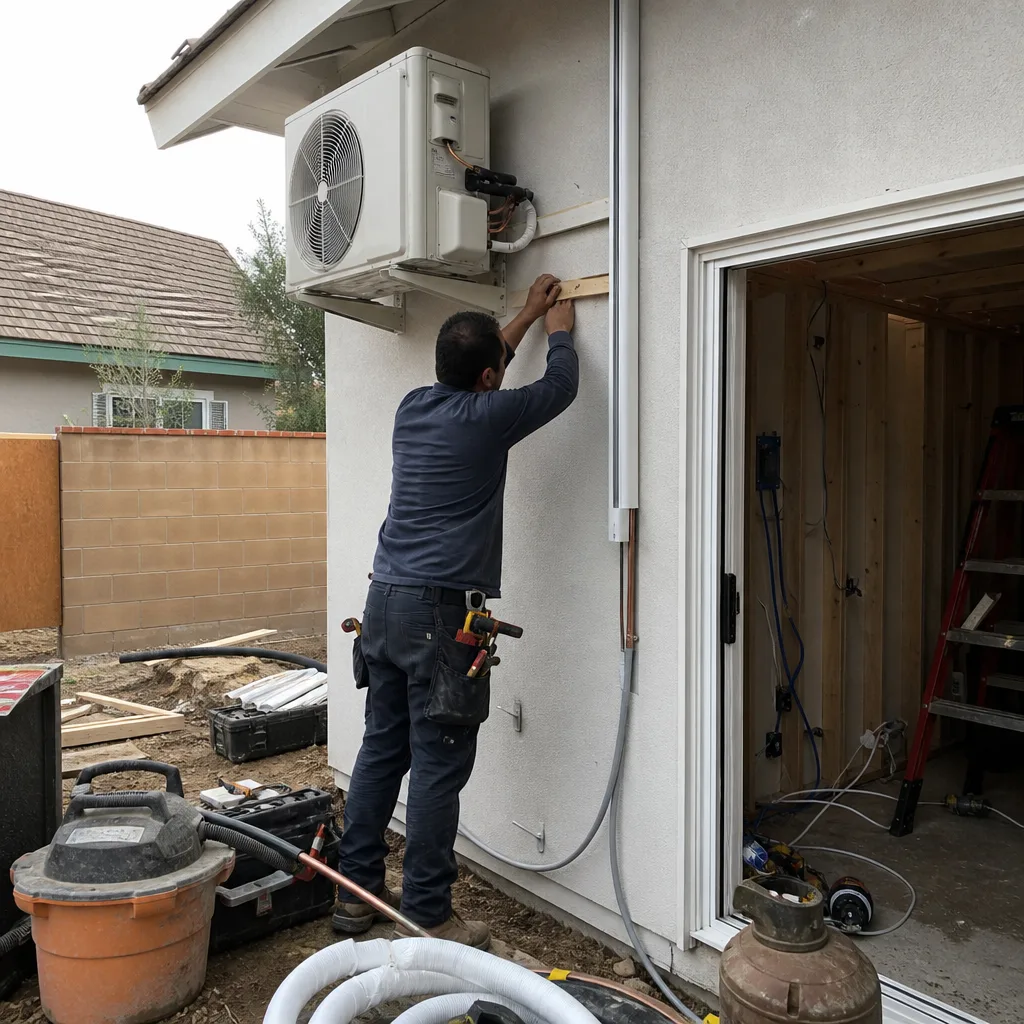
In Camarillo specifically, the City Building Division enforces subcontractor licensing at rough inspection. If your electrical rough-in lacks a C-10 contractor’s stamp and permit, the inspector fails the entire rough. We’ve seen owner-builders lose 4-6 weeks sourcing a licensed electrician willing to stamp another person’s work. Most won’t. The liability exposure is too high.
The practical result: even an owner-builder project carries subcontractor costs for roughly 40-50% of the construction value. The savings come from the general contractor markup and self-performed finish work, not from eliminating professional labor entirely.
Real Cost Comparison: DIY vs. Professional Design-Build
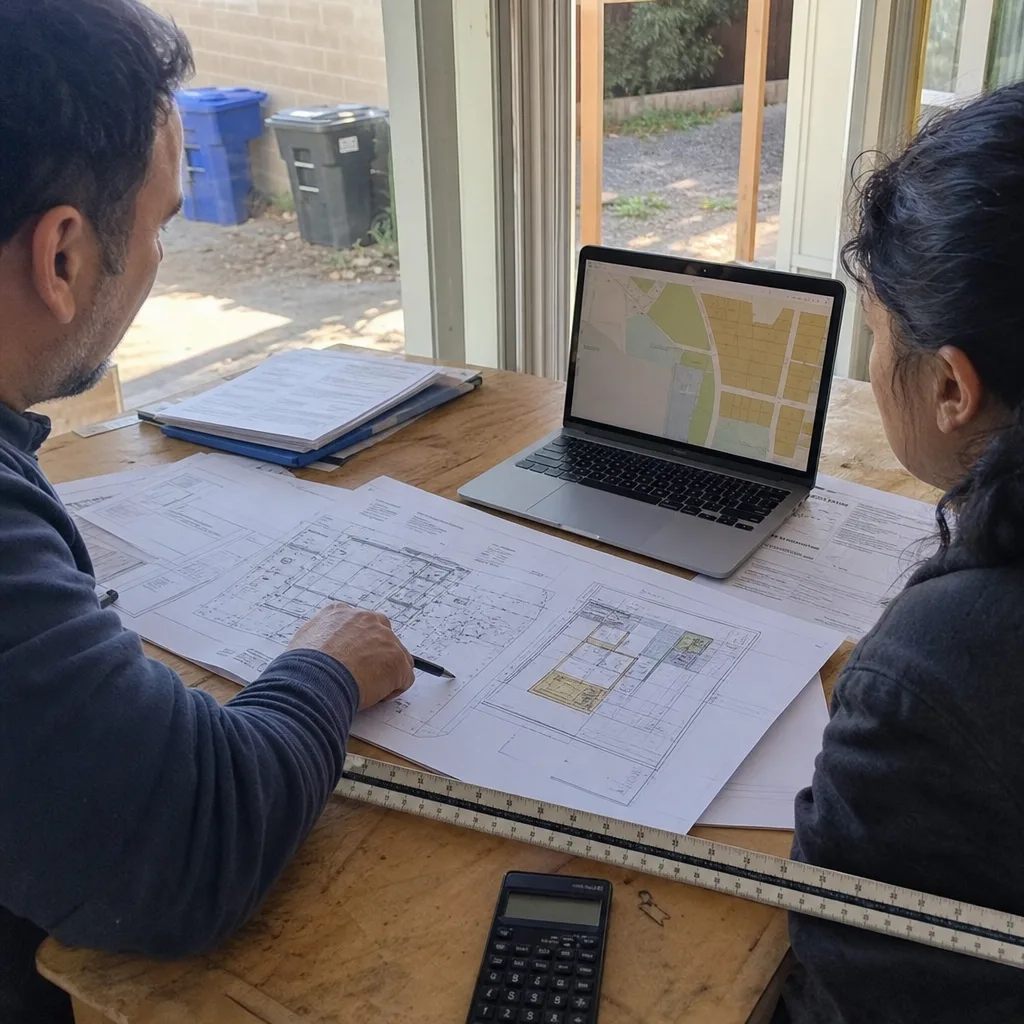
Let’s name numbers for Camarillo’s market. These ranges reflect 2024-2025 project data for permitted ADUs in Ventura County, including city fees and school district fees.
Garage Conversion ADU (400-500 sq ft):
| Owner-builder hard costs (materials, permits, licensed subs) | $95,000-$130,000 |
| Owner-builder soft costs (architect, structural engineer, permit expediter) | $12,000-$18,000 |
| Owner-builder timeline (typical) | 8-14 months |
| Professional design-build, all-in | $140,000-$185,000 |
| Professional timeline (typical) | 4-6 months |
New Detached ADU (600-750 sq ft):
| Owner-builder hard costs | $180,000-$250,000 |
| Owner-builder soft costs | $18,000-$28,000 |
| Owner-builder timeline (typical) | 12-20 months |
| Professional design-build, all-in | $260,000-$340,000 |
| Professional timeline (typical) | 6-9 months |
The gap narrows when you add costs owner-builders rarely budget for:
- Permit correction fees. Camarillo charges $180 per re-inspection after the second failure on any single trade. We’ve seen owner-builders accumulate $2,000-$4,000 in re-inspection fees on foundation and framing alone.
- Subcontractor markup on owner-builder jobs. Licensed subs charge 10-20% more when working for an unlicensed owner-builder. Their insurance and bonding costs rise, and they factor in additional coordination burden.
- Extended carrying costs. Every month of construction delay is a month of lost rental income. At $2,800-$3,400/month for a Camarillo ADU, a 6-month timeline difference equals $16,800-$20,400 in foregone revenue.
- Resale friction cost. Difficult to quantify precisely, but Camarillo real estate agents we’ve spoken with estimate owner-builder ADUs trade at 3-5% below comparable professionally built units, or require $8,000-$15,000 in seller credits for buyer-requested verification work.
Under Haven Standard Clause 1, garage conversion ADUs in Camarillo are quoted with a written price before any work begins. The price includes drawings, permit set, all trades, and final inspection. No change orders without written amendment. That’s the comparison an owner-builder should make: not just material costs, but total project cost with certainty attached.
Where DIY Is Most Defensible (and Where It Isn’t)
After reviewing hundreds of Camarillo ADU projects, we’ve identified a clear pattern. Owner-builder risk concentrates in the early trades and diminishes in finish work.
Most defensible: interior finish post-rough inspection.
Once the inspector has signed off on framing, electrical, plumbing, and HVAC rough-in, the remaining work is largely cosmetic and code-verified through visual inspection. Drywall, paint, flooring, trim, and cabinetry installation carry lower safety stakes and simpler correction paths. A homeowner with genuine construction experience can self-perform this phase with manageable risk. The Camarillo Building Division’s finish inspection checklist is six pages and largely visual.
Moderate risk: framing and structural carpentry.
California’s Title 24 energy code and the City’s wind exposure requirements (Camarillo sits in a moderate wind zone per Ventura County maps) create specific fastening and shear panel requirements. Owner-builders often underspecify hold-downs at shear walls or misplace anchor bolts. These are correctable but typically require engineered repair drawings and a re-inspection cycle.
Highest documented risk: foundation, weather envelope, and utility connections.
Camaro’s clay-heavy soils in the Pleasant Valley area and seasonal moisture variation make foundation prep critical. We’ve documented cases where owner-builders poured slabs without proper vapor barriers or expansion joints, resulting in moisture migration through slab edges that triggered mold remediation two years later. The weather envelope - roof-to-wall flashing, window integration, waterproofing at slab penetrations - fails most often on owner-builder projects. Proper Seasonal ADU Care for Camarillo: Year-Round Homeowner’s Guide can help prevent these issues from worsening over time. These failures don’t appear at final inspection. They appear at the two-year mark, when warranty periods have expired and repair costs fall entirely on the owner.
For new detached ADUs in Camarillo, the foundation and weather envelope represent roughly 25% of construction value but generate 60% of post-occupancy defect claims. This is where professional design-build’s single-contract accountability matters most. Under the 365-Day Done Right Promise, if the finished ADU is not built to the permitted drawings, we make it right - in writing, before the project starts.
Camarillo Inspection Failure Rates by Trade
The City of Camarillo Building Division does not publish official failure statistics, but through permit data review and inspector feedback, we’ve compiled representative first-attempt pass rates for ADU projects in 2023-2024.
| Foundation/Slab | Owner-builder: 55% first-pass | Professional: 82% first-pass |
| Framing/Structural | Owner-builder: 48% first-pass | Professional: 78% first-pass |
| Electrical Rough | Owner-builder: 62% first-pass* | Professional: 88% first-pass |
| Plumbing Rough | Owner-builder: 58% first-pass* | Professional: 85% first-pass |
| HVAC Rough | Owner-builder: 65% first-pass* | Professional: 86% first-pass |
| Insulation/Title 24 | Owner-builder: 52% first-pass | Professional: 81% first-pass |
| Final | Owner-builder: 71% first-pass | Professional: 91% first-pass |
*Note: Electrical, plumbing, and HVAC rough-in on owner-builder projects is typically performed by licensed subcontractors, but coordination errors - wrong rough-in heights, missed locations, insufficient access for inspection - generate failures that a professional GC would catch in pre-inspection walkthrough.
Each failure costs time. Camarillo’s inspector schedule runs 3-5 business days for re-inspection. In a project with six trade inspections, even two failures add 2-3 weeks. For owner-builders managing their own schedule, that delay cascades into subcontractor re-mobilization fees and extended financing costs.
The pattern is clear: owner-builders fail most often where building science and code specificity intersect. Professional crews have seen the failure modes before and build to avoid them. At Ellery ADU Studio Camarillo home, our documented photo record on every visit captures pre-inspection conditions so corrections happen before the inspector arrives, not after.
Common Mistakes to Avoid
- Assuming the owner-builder permit saves the general contractor markup entirely. You’ll still pay licensed subs for electrical, plumbing, HVAC, and structural work. The savings are 8-12% of total project cost, not 25-30%.
- Missing the occupancy requirement’s rental impact. We’ve spoken with Camarillo owners who completed garage conversions planning immediate tenant placement, then learned the one-year personal occupancy rule. That year of lost rent ($30,000-$40,000) dwarfed their projected savings.
- Treating the permit set as a formality. Camarillo requires full structural calculations for detached ADUs over 120 square feet and Title 24 energy compliance documentation. Owner-builders who skimp on drawings face stop-work orders and redesign costs mid-project.
- Underestimating Camarillo’s school district fees. The Pleasant Valley School District and Oxnard Union High School District both impose developer impact fees on ADUs over 750 square feet or with new utility meters. These range $3,500-$6,800 and must be paid before certificate of occupancy. They’re not optional and they’re not waivable for owner-builders.
- Failing to coordinate prefab delivery with site prep. If you’re considering a Dvele, Mighty Buildings, or Boxabl unit, the foundation and utility rough-in must meet precise tolerances. Owner-builders often pour slabs to conventional specs, then learn the prefab manufacturer’s connection points don’t align. Rework costs on prefab misalignment start at $8,000.
- Skipping the resale disclosure in financial planning. The owner-builder disclosure affects your exit math. If you plan to sell within 5-7 years, the disclosure’s impact on buyer pool and offer price may eliminate the construction savings entirely.
When to Call a Professional
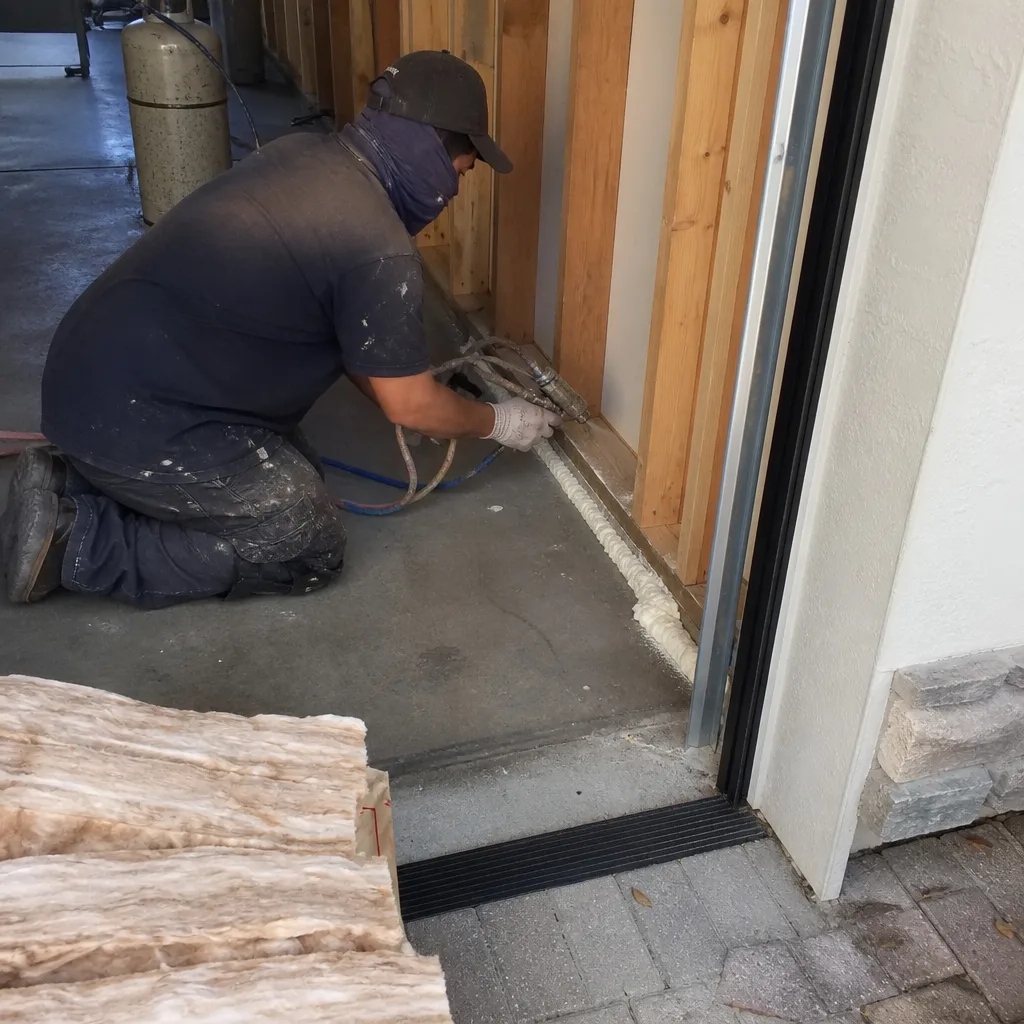
Call a professional when the project involves foundation work, structural framing, or any trade requiring a license you don’t hold. Call a professional when your timeline for rental income matters. Call a professional when you plan to sell within a decade and want clean documentation.
At Ellery ADU Studio Camarillo, we offer a Free Second Opinion on any written estimate already in hand. Bring us your owner-builder budget and we’ll identify the gaps we’ve seen in similar Camarillo projects - not to sell you, but so you decide with full information. Every project we take carries a written price before work starts, per Haven Standard Clause 1, and a 365-Day Done Right Promise backed in writing. A live person answers calls 24/7 at (805) 301-9518.
Frequently Asked Questions
Professional design-build for a garage conversion ADU in Camarillo typically runs $140,000-$185,000 all-in, while owner-builder projects range $107,000-$148,000 before hidden costs. After permit correction fees, extended carrying costs, and lost rental income during longer timelines, the net difference often shrinks to 8-15%. Call (805) 301-9518 for a written quote on your specific site - estimates are free.
No. California’s owner-builder exemption requires you to personally occupy the completed ADU for at least 12 months. Renting it sooner violates the exemption and can trigger enforcement action from the Contractors State License Board. This occupancy requirement makes owner-builder status incompatible with immediate rental income strategies.
The disclosure does not prevent sale, but it introduces friction. Buyers receive a statement that the ADU was built without licensed contractor oversight. Some lenders require additional inspection documentation, and buyers may negotiate repair credits or price reductions. In Camarillo’s market, we’ve seen estimates of 3-5% sale price impact or $8,000-$15,000 in seller credits.
You can self-perform rough carpentry, drywall, painting, flooring, finish carpentry, basic site work, and insulation. You cannot self-perform electrical rough-in, plumbing rough-in, gas work, HVAC installation, structural concrete, or roofing over 500 square feet without the appropriate California contractor license. Camarillo inspectors verify subcontractor licenses at rough inspection.
Owner-builder timelines in Camarillo average 8-14 months for garage conversions and 12-20 months for detached ADUs, compared to 4-6 months and 6-9 months respectively for professional design-build. The difference comes from permit familiarity, pre-inspection quality control, and established subcontractor relationships that prevent scheduling gaps.
Yes. We specify and coordinate prefab and modular systems from Dvele, Mighty Buildings, Boxabl, Plant Prefab, and other manufacturers within our single-contract design-build model. The foundation, utility connections, and final inspection remain our responsibility, so the manufacturer and our field team coordinate under one written scope. See ADU Design & Permitting in Camarillo for how we integrate prefab systems with site-specific permit sets.
The Bottom Line
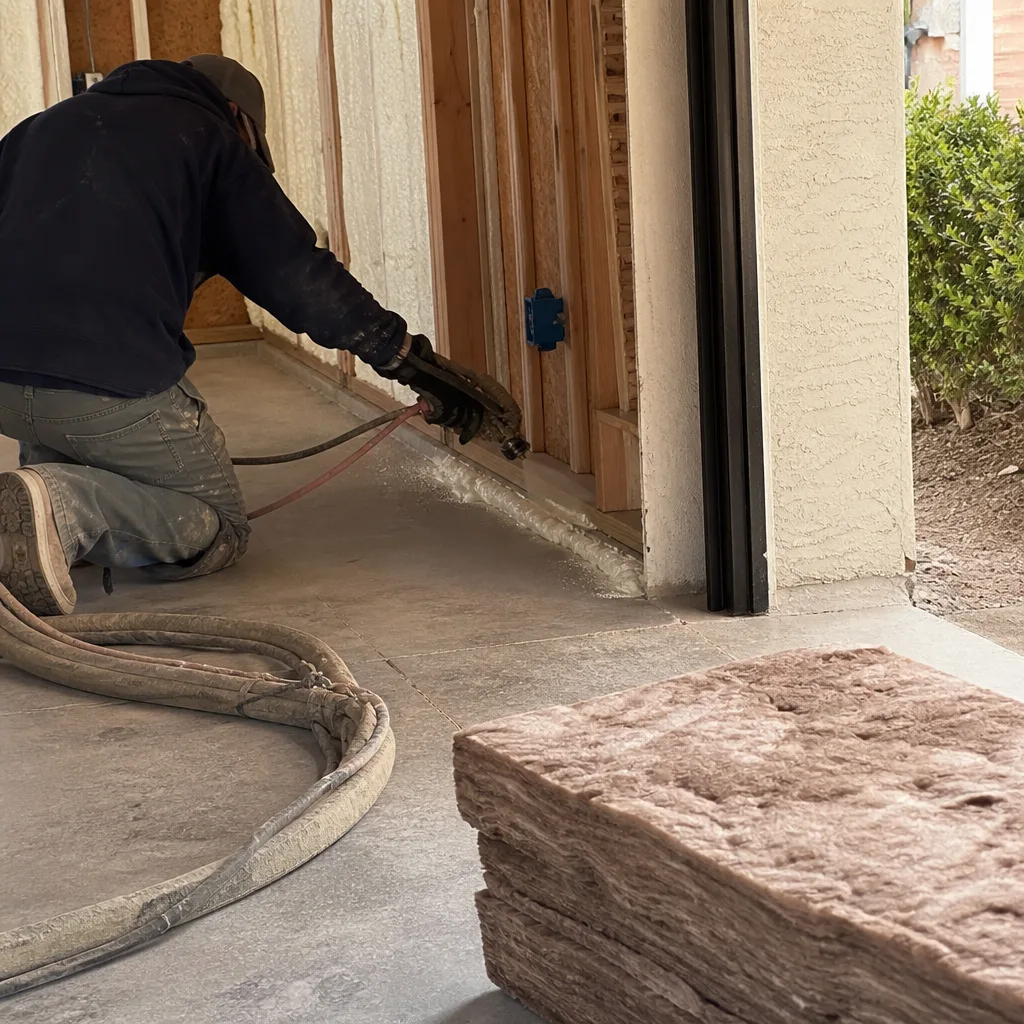
The DIY ADU question in Camarillo is not about whether you can swing a hammer. It’s about whether you’re prepared to occupy the unit for a year, disclose the construction method at resale, and manage licensed subcontractors for half the project value while absorbing the schedule risk yourself. For some homeowners, particularly those with genuine construction experience and no near-term rental or sale plans, owner-builder status is defensible for finish work. For most, the savings evaporate against hidden costs, and the legal obligations create constraints that professional design-build avoids entirely. The Haven Standard exists because we’ve documented what goes wrong when accountability is split or absent: a written price before work starts, a photo record of what was found and done, and a 365-Day Done Right Promise - because a six-figure decision deserves six-figure documentation. Explore more guides & resources on planning, building, and maintaining your ADU.
Written by Nadia Ellery, Owner at Ellery ADU Studio Camarillo, serving Camarillo since 2015.