
Last updated September 25, 2026
How to Hire a ADU Contractor in Camarillo: A Step-by-Step Guide
A California contractor’s Class B license legally allows a builder to pull an ADU permit using third-party drawings they have never reviewed. That credential on the business card says nothing about whether that contractor has ever read a Camarillo permit set or sat through a City pre-application meeting. In this guide and our ADU Design & Permitting Maintenance Checklist for Camarillo Homeowners, we’ll walk through how to verify what actually matters: permit history in Camarillo’s public records, the contract language that prevents change orders, and why the sequence of designer-first versus contractor-first can cost or save you tens of thousands. We’ll also cover the three license types that can legally build an ADU in California, what each covers and does not cover, and the interview questions that reveal whether a contractor treats the permit set as a deliverable or a formality.
Quick Answer
Hiring an ADU contractor in Camarillo starts with verifying their local permit pull history, confirming their license type matches your project scope, and reviewing their contract for fixed-price language with defined change-order triggers. The most expensive mistake is hiring a contractor before your permit set is complete, because vague drawings produce change orders, not buildings. A design-build studio handles drawings, permitting, and construction under one contract at one written price, eliminating the designer-versus-builder blame gap.
Table of Contents
- The Three License Types That Can Legally Build an ADU in California
- How to Verify a Contractor’s Camarillo Permit History
- The Five Contract Clauses That Separate Professional from Boilerplate
- Why the Design-Build Model Eliminates the Contractual Blame Gap
- Interview Questions That Reveal Permit-Set Discipline
- Camarillo-Specific Considerations: Climate, Code, and Market
- Common Mistakes to Avoid
- When to Call a Professional
- Frequently Asked Questions
The Three License Types That Can Legally Build an ADU in California
California law allows three categories of licensees to perform work on a residential ADU project. Understanding what each can and cannot do protects you from scope gaps and liability exposure.
Class B General Building Contractor
The Class B license is the most common for ADU construction. It authorizes work on any structure built for shelter, including framing, concrete, and finish trades. But here’s the limitation: a Class B contractor cannot perform specialty trades (electrical, plumbing, HVAC) with their own crews unless they also hold the relevant Class C specialty license or subcontract to a licensed specialist. For a garage conversion ADU in Camarillo, this matters because the existing electrical service often needs upgrading, the slab may need moisture barrier remediation, and the HVAC system must be independent from the main house. If your Class B contractor plans to self-perform electrical panel work without a C-10, that’s a red flag.
Class A General Engineering Contractor
The Class A license covers engineering projects: grading, drainage, retaining walls, and foundation work. For a new detached ADU in Camarillo, a Class A contractor can handle site prep, utility trenching, and any retaining wall over 4 feet. But they cannot build the structure itself without a Class B license. In the hilly neighborhoods near Camarillo Springs or the terrain above Pleasant Valley Road, site prep complexity often requires Class A capability. If your project needs significant grading, you’ll either need a contractor with both A and B licenses or two separate contractors with a clear interface agreement. The latter creates coordination risk.
Class C Specialty Contractors
Class C licenses cover single trades: C-10 Electrical, C-36 Plumbing, C-20 Warm-Air Heating, C-38 Refrigeration. These contractors cannot contract for the whole ADU project. They can only perform their specialty. In practice, a homeowner who hires a Class B general contractor will see C-class subcontractors on the permit application. That’s normal and legal. What you want to verify is that the Class B contractor’s agreement names the specific subcontractors and does not allow open-ended “or equivalent” substitutions without your written approval.
At Ellery ADU Studio Camarillo, our design-build contract covers all five service categories - ADU Design & Permitting in Camarillo, garage conversion, new detached ADU, junior ADU and interior conversion, and site prep with utilities - under one written price. The subcontractors are named in the contract, not filled in later.
How to Verify a Contractor’s Camarillo Permit History
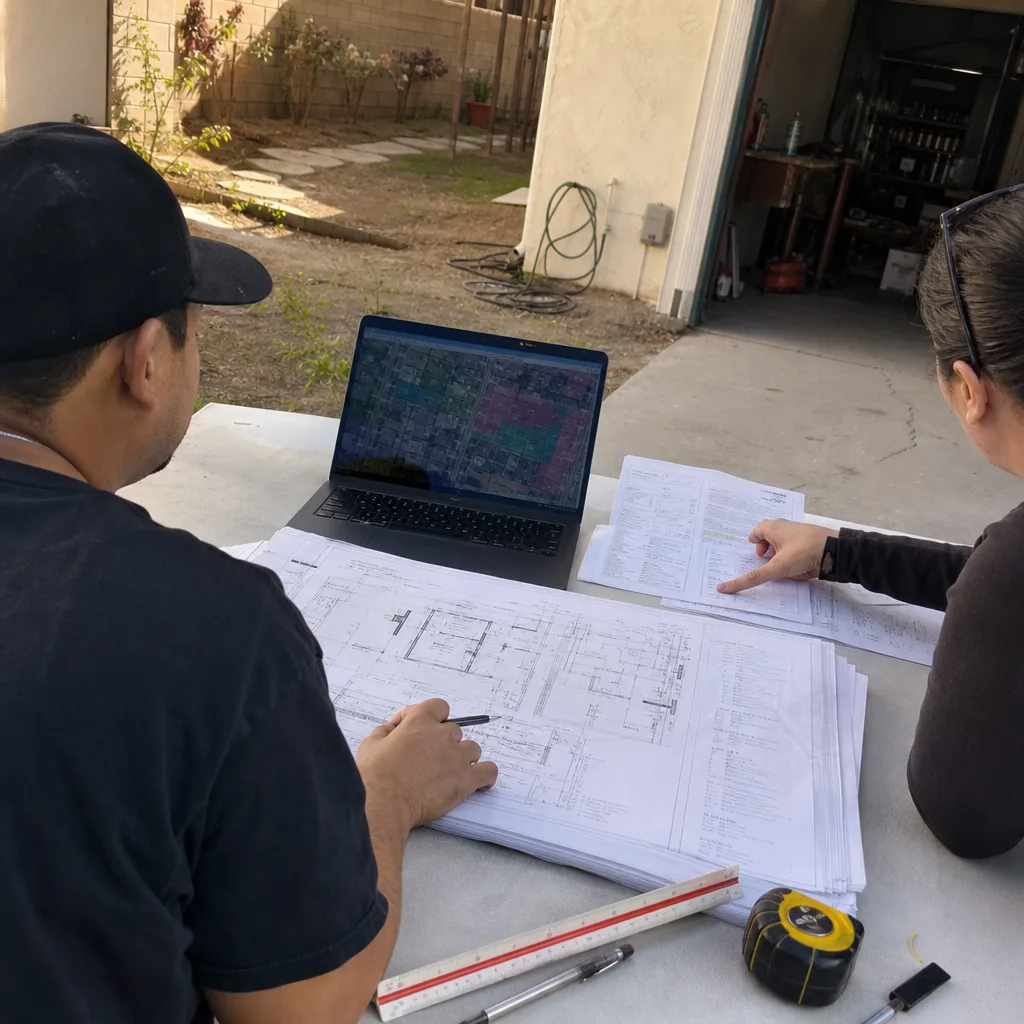
A contractor can show you beautiful portfolio photos from anywhere. What they cannot easily fake is a consistent permit pull history in Camarillo’s public records. Here’s how to check.
Step 1: Access the Right Portal
Camarillo uses the Ventura County e-Permit system for building permits, but the City of Camarillo maintains its own planning and zoning records. Start at the Camarillo City website, navigate to Community Development, then to the Permit History search. You’ll need the contractor’s license number, which must appear on every page of their marketing materials - not just claimed, but displayed. If it’s not visible, that’s your first signal.
Step 2: Search by Contractor Name and License Number
Enter the business name and the CSLB license number. A healthy history for an active ADU contractor in Camarillo shows:
- Permit applications filed within the last 12 months
- A mix of project types: new construction, conversions, additions
- Permits that reached final inspection status, not just issued
- Correction letters that were cleared and re-submitted, not abandoned
What a sparse history signals: if a contractor claims years of ADU experience but shows three permits in Camarillo over five years, they’re either working unpermitted, subcontracting through other licensees, or exaggerating their local volume. In our experience, a contractor actively building ADUs in Camarillo should have permit activity every quarter.
Step 3: Read the Correction Letters
This is the step most homeowners skip. When Camarillo Planning or Building issues plan corrections, the contractor’s response pattern reveals their process discipline. Look for:
- Correction letters addressed to the contractor directly, not just to a third-party designer - indicating the contractor reviews the permit set
- Response times under 14 days - Camarillo allows 180 days before permit expiration, but professionals turn corrections around quickly
- Corrections that get cleared in one or two rounds, not cycling through four or five - suggesting the initial submittal was thorough
A contractor who treats corrections as the designer’s problem, not theirs, will show a pattern of delayed responses or requests for permit extensions. That’s the designer-versus-builder blame gap in action, and it costs homeowners in carrying costs and frustration.
The Five Contract Clauses That Separate Professional from Boilerplate
The California Contractors State License Board publishes a standard form contract. Most ADU contractors in Camarillo use some variation. The difference between a professional ADU proposal and a boilerplate construction agreement lives in five specific clauses.
Clause 1: Fixed Price Versus Allowance Language
A fixed-price contract states the total dollar amount for the complete scope. An allowance contract states a dollar figure for categories like “kitchen package” or “flooring,” with the actual cost determined later. Allowances are not inherently bad, but in ADU construction they create open-ended exposure. A contractor who allowances the entire finish package is asking you to underwrite their estimating error.
At Ellery ADU Studio, our Haven Standard, Clause 1 requires a written price before any work starts. Every project - garage conversion, new detached, junior ADU - is quoted with a fixed price covering drawings through final inspection. The words “call for a quote” do not appear anywhere in our materials because they contradict the standard we ask clients to hold us to.
Clause 2: Change-Order Trigger Definitions
Every contract allows change orders. The question is what triggers them. A professional ADU contract defines specific triggers:
- Owner-requested scope changes (upgrades, additions, relocations)
- Concealed conditions discovered after demolition (asbestos, undocumented utilities, substandard existing construction)
- Code changes effective after permit issuance
What should not trigger a change order: the contractor’s failure to verify existing conditions during due diligence, errors in the contractor’s own takeoff, or price increases from the contractor’s supplier. If the contract is silent on trigger definitions, every unexpected condition becomes a negotiation.
Clause 3: Lien Release Schedule
California law allows mechanics liens for unpaid work. A professional contract structures payments tied to lien releases from the general contractor and every subcontractor. The schedule should read: payment upon receipt of unconditional lien release for the prior period’s work. If your contract bundles payments without individual lien releases, you risk paying the general contractor who then fails to pay the electrician - and the electrician liens your property.
Clause 4: Permit Set as Contract Document
This is the clause that prevents the sequencing mistake we opened with. The contract must attach the permit set - the stamped, approved drawings - as an exhibit and state that construction shall conform to these drawings. Without this language, the contractor can claim they bid from preliminary sketches and that the approved drawings exceed scope. We’ve seen this dispute in Camarillo’s Las Posas Estates and in the older neighborhoods near Old Town, where foundation conditions or utility locations differ from assumptions.
Clause 5: Warranty and Remedy Language
The standard CSLB contract includes a one-year warranty. For an ADU - a dwelling unit with full kitchen, bath, and independent utilities - that’s insufficient. Look for:
- Workmanship warranty beyond one year
- Specific remedy language: repair, replacement, or refund
- Written commitment, not verbal assurance
Our Haven Standard includes the 365-Day Done Right Promise: if the finished ADU is not built to the permitted drawings, we make it right - in writing, before the project starts. The documentation matters more than the duration.
Why the Design-Build Model Eliminates the Contractual Blame Gap
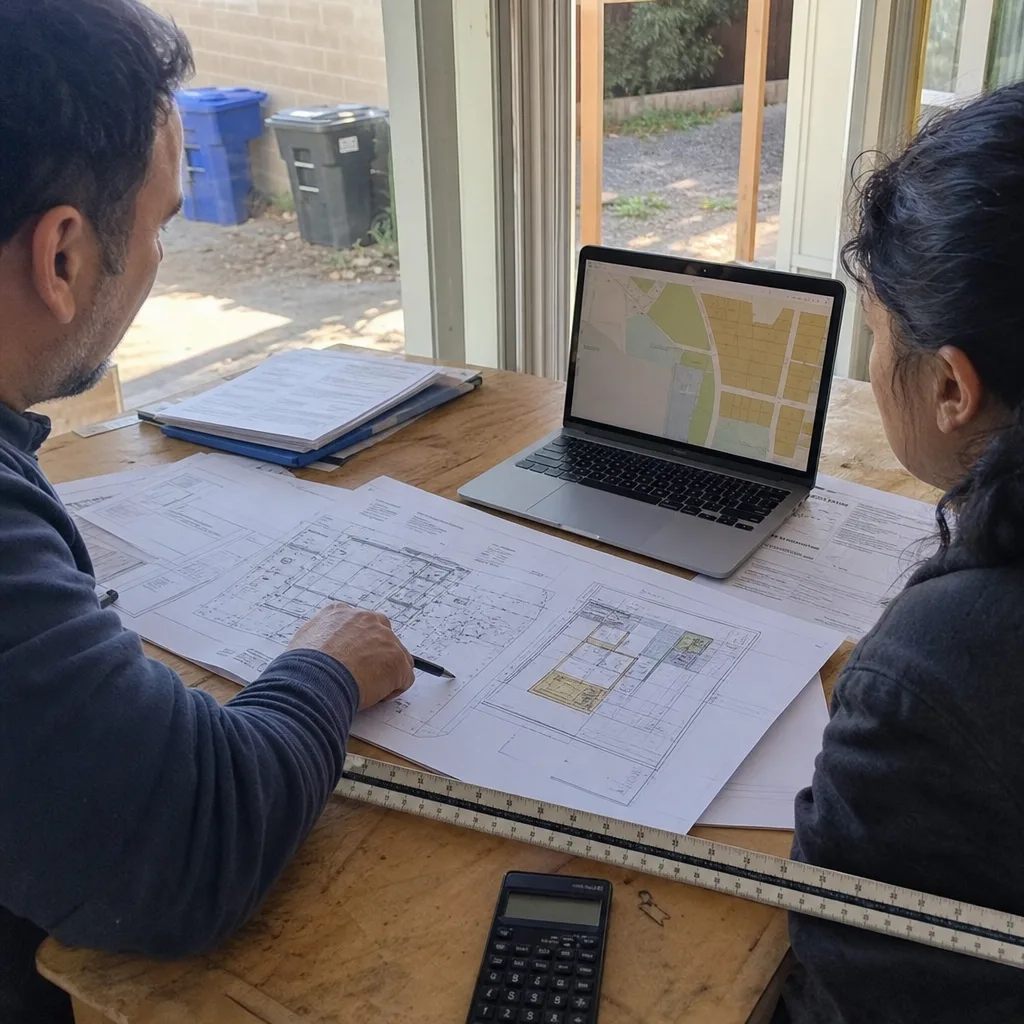
When designer and builder are separate vendors, scope disputes live in the gap between their two contracts. That gap is funded by the homeowner.
How the Gap Forms
Here’s a pattern we’ve observed in Camarillo ADU projects. A homeowner hires an architect or designer for $8,000-$15,000. The designer produces drawings sufficient for permit application. The homeowner then solicits contractor bids. Three contractors respond with prices ranging from $140,000 to $220,000. The homeowner selects the middle bid. During construction, the contractor discovers the drawings show a 24-inch door where a 32-inch accessible door is required, or the electrical panel location conflicts with the water heater placement, or the foundation detail doesn’t account for Camarillo’s expansive clay soils in the Pleasant Valley corridor.
The contractor issues a change order. The homeowner asks the designer to fix the drawings. The designer notes their contract ended at permit approval. The contractor notes they bid from the drawings provided. The homeowner pays for new drawings, permit amendments, and construction delays.
The Single-Contract Alternative
A design-build studio like Ellery ADU Studio Camarillo holds one contract for drawings, permitting, and construction at one written price. When the electrical panel conflicts with the water heater, there is no dispute over who pays. The studio absorbs the coordination cost because the coordination was their responsibility from the start. This is not theoretical: in 900+ ADUs designed, permitted, and built since 2015, every project has had a written price before work started and a documented photo record when work was complete.
The design-build model also compresses schedule. In Camarillo’s permit process, a single entity can respond to corrections without scheduling meetings between designer and contractor. For homeowners carrying construction financing, schedule compression directly reduces interest cost.
Interview Questions That Reveal Permit-Set Discipline
Most homeowners ask about timeline and price. These questions reveal whether a contractor treats the permit set as a deliverable or a formality.
Question 1: Who at your firm attends the Camarillo pre-application meeting?
The correct answer names a specific person with a specific role - not “our team” or “we send someone.” At Ellery ADU Studio, a project manager who will oversee the construction attends the pre-application meeting alongside the designer. They hear the planning staff’s concerns directly, not through meeting notes. This matters because Camarillo’s planning staff often flag site-specific issues - oak tree protection zones in the foothill areas, fire access requirements for detached units on sloped lots, or utility connection points that differ from standard assumptions.
Question 2: Who reviews the correction letter before response?
A contractor who treats the permit set as a formality will say “our permit expeditor handles that” or “the designer takes care of corrections.” A contractor who treats the permit set as a contract document will say “the project superintendent reviews corrections against the construction schedule and material orders” or “I personally review them to confirm we can build what’s drawn.”
Question 3: Can you show me a completed Camarillo permit set for a project similar to mine?
Not photos of the finished ADU. The permit set: the site plan, floor plans, elevations, structural details, energy calculations, and Title 24 compliance documentation. A contractor who cannot produce this is bidding from incomplete information, which becomes your change order risk.
Question 4: What prefab or modular systems have you specified and coordinated?
For homeowners considering factory-built options, this question separates contractors who’ve actually worked with systems like Cover, Dvele, or Mighty Buildings from those who’ve read press releases. Each system has specific foundation requirements, crane access needs, and utility connection protocols. A contractor who coordinated a Dvele unit onto a Camarillo hillside lot knows the crane pad specifications and the transport route clearances. A contractor who hasn’t will learn on your project.
Question 5: What does your documented photo record include?
This question often confuses contractors who don’t produce one. The answer you want: dated photos of existing conditions before demolition, progress photos at rough inspection points, and final photos at certificate of occupancy. The answer you don’t want: “we take photos if there’s a problem” or “the client can visit the site.” A documented photo record is evidence of what was found and what was done, not a summary of how it felt.
Camarillo-Specific Considerations: Climate, Code, and Market
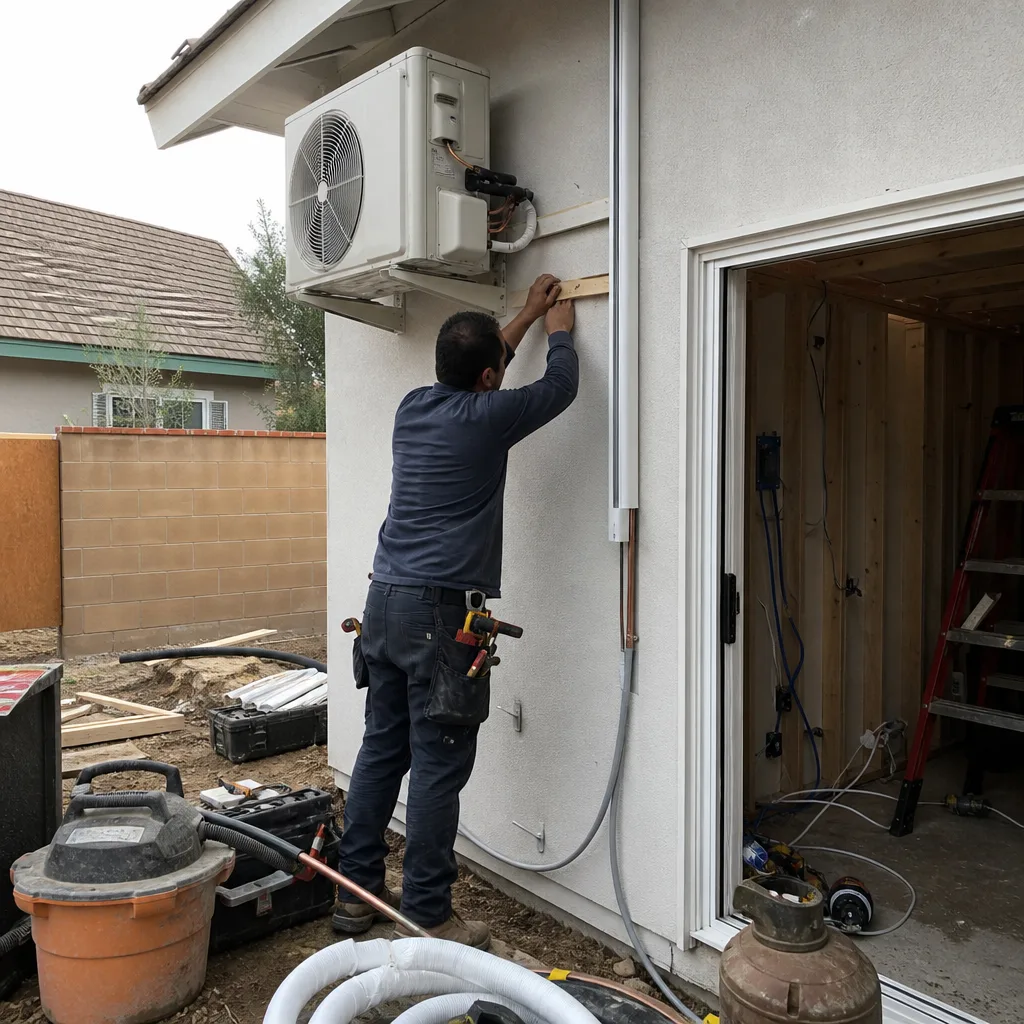
ADU construction in Camarillo operates under California statewide law but with local conditions that affect design, cost, and contractor selection - topics covered in our Seasonal ADU Care for Camarillo: Year-Round Homeowner’s Guide.
Climate and Energy Code
Camarillo’s mild coastal climate - average highs of 72°F, lows of 52°F - might suggest minimal HVAC needs. But Title 24 energy code requires heating capability in all dwelling units, and Camarillo’s position in Climate Zone 6 triggers specific insulation and glazing requirements. A contractor unfamiliar with Camarillo’s energy compliance path may specify equipment that passes load calculations but fails the performance model. Our permit sets include the CF-1R and MF-1R forms required by the City, not as an afterthought but as a design driver.
Soil and Foundation Conditions
The Camarillo plain sits on alluvial soils with expansive clay content in pockets, particularly in the areas east of Lewis Road and south of Pleasant Valley. New detached ADUs require soils reports for engineered foundations in these zones. Garage conversions can often use existing slabs, but the slab thickness and reinforcement must be verified. We’ve found 4-inch slabs with minimal steel in 1970s Camarillo tract homes that require supplemental piers for conversion loading. A contractor who doesn’t verify existing conditions during design will discover them during demolition - and present a change order.
Neighborhood Character and Design Review
Camarillo’s older neighborhoods - Old Town, Camarillo Heights, the area around Mission Oaks - have design guidelines or historic overlay considerations that affect ADU massing, materials, and roof forms. A contractor who pulls permits regularly in Camarillo knows which neighborhoods trigger additional review and how to prepare submittals that avoid delay. The Las Posas Estates area, for example, has specific landscape and screening requirements for detached ADUs visible from the street.
Market Pricing Context
As of 2024-2025, garage conversion ADUs in Camarillo typically run $165,000-$245,000 all-in, drawings through final inspection, depending on existing structure condition and finish level. See our ADU Cost Breakdown: The Camarillo Homeowner’s Reference for 2026 for detailed line-item analysis. New detached ADUs typically run $285,000-$420,000 for studio-to-two-bedroom units under 800 square feet on flat lots with standard utility connections. These ranges reflect Camarillo’s labor market, permit fee schedule, and the cost of compliance with current energy and accessibility codes. Any contractor quoting significantly below these ranges without clear scope exclusions is either missing something or planning change orders.
Common Mistakes to Avoid
- Hiring a contractor before the permit set is complete. A bid based on preliminary sketches is not a price; it’s an estimate that will grow. The contractor has no contractual obligation to absorb the difference between assumed and actual conditions.
- Accepting an allowance-heavy contract without understanding the exposure. A $40,000 “kitchen and bath allowance” sounds specific until you select finishes and discover the allowance covers mid-grade laminate, not the quartz and tile you assumed.
- Failing to verify local permit history. A contractor with beautiful portfolio photos from Los Angeles or Santa Barbara may have never pulled a permit in Camarillo. The City’s process, staff, and correction patterns are specific knowledge.
- Assuming a Class B license covers all trades. Electrical, plumbing, and HVAC require C-class specialists. Verify who performs this work and whether they’re named in the contract.
- Neglecting the pre-application meeting. Camarillo offers pre-application meetings for ADU projects. Skipping this to save time often costs more time in corrections later. A contractor who discourages attendance is revealing their process.
- Choosing price over documentation. The lowest bid with no written warranty, no photo record, and no fixed-price guarantee is not cheaper. It’s riskier, and risk in construction converts to cost.
When to Call a Professional
Call a design-build professional when you’re serious about an ADU as a long-term asset, not a weekend exploration. For more guides & resources, visit our blog. Specific triggers: you’ve confirmed your property qualifies under Camarillo’s ADU ordinance, you’ve reviewed your mortgage or equity position for construction financing, and you have a written estimate from another contractor that you want verified. Ellery ADU Studio Camarillo offers free estimates in Camarillo - call (805) 301-9518. We also provide a Free Second Opinion on any written estimate already in hand, comparing scope, price, and contract terms against what a complete permit set and fixed-price build should include.
Frequently Asked Questions
Garage conversion ADUs in Camarillo typically run $165,000-$245,000 all-in, and new detached ADUs typically run $285,000-$420,000 for units under 800 square feet, depending on site conditions and finish level. Every project at Ellery ADU Studio is quoted with a written price before any work starts, per Haven Standard Clause 1. Call (805) 301-9518 for an exact quote - estimates are free.
One firm can handle both under a design-build contract, which eliminates the contractual blame gap between separate designer and builder. When drawings, permitting, and construction are under one written price, coordination failures are the firm’s responsibility, not the homeowner’s cost. Ellery ADU Studio has operated this way in Camarillo since 2015.
Camarillo’s ADU permit timeline typically runs 8-14 weeks from complete submittal to issuance, depending on project complexity and correction rounds. A thorough pre-application meeting and complete permit set reduce correction cycles. Expedited review is available for certain projects but does not eliminate the need for complete documentation.
Under a fixed-price contract with defined change-order triggers, the price does not change unless you request scope modifications or concealed conditions are discovered. The Haven Standard, Clause 5 (No Surprises), locks the scope at signing with no door-side upsells. A contract without this language leaves you exposed to escalation.
Ellery ADU Studio pulls all permits as part of our design-build contract. The permit set is our deliverable, and we attend all inspections through final certificate of occupancy. Homeowners who manage their own permits assume liability for code compliance and inspection scheduling that most are not equipped to handle.
Several factory-built systems can work in Camarillo, including Cover, Dvele, and Mighty Buildings, depending on site access, foundation conditions, and design review requirements. Ellery specifies and coordinates these systems within the same single contract as site-built work, handling crane logistics, utility connections, and final inspection. Not every lot suits prefab; we evaluate access routes and setback constraints during design.
The Bottom Line
Hiring an ADU contractor in Camarillo is not about finding the lowest bid or the most impressive portfolio. It’s about verifying permit discipline, reading contract language for fixed-price protection, and sequencing the design before the build so that the price you receive is the price you pay. The three license types, the public records verification process, and the five contract clauses we’ve outlined give you the framework to evaluate any contractor against evidence, not promises. For homeowners who want the designer and builder accountable to a single written standard, the design-build model removes the gap where most ADU budgets fail.
Written by Nadia Ellery, Owner at Ellery ADU Studio Camarillo, serving Camarillo since 2015.