
Last updated September 25, 2026
Seasonal ADU Care for Camarillo: Year-Round Homeowner’s Guide
Camarillo averages only 14 inches of rain per year, but 80% of it falls in a five-month window - and an ADU with a slightly improperly sloped deck or an uncaulked window flashing will absorb that entire annual load in a single wet December before the owner notices the stain on the interior drywall. We’ve inspected ADUs in Camarillo’s Mission Oaks and Las Posas Estates neighborhoods where a $12 caulking gap became a $23,000 subfloor replacement in year four, simply because the maintenance calendar never matched the actual weather pattern. This guide schedules your ADU maintenance around Camarillo’s three real climate events: the October-March rain window, the June marine layer, and the September-October Santa Ana wind events. For ADU Design & Permitting Maintenance Checklist for Camarillo Homeowners, see our companion resource.
Quick Answer
ADU maintenance in Camarillo follows three distinct seasons: a pre-rain exterior inspection each October, a marine-layer moisture check each June, and a wind-season roof and ventilation review each September. Homeowners who follow this calendar typically spend $400-$800 annually on preventive maintenance, while those who defer it face $8,000-$25,000 moisture and mechanical failures in years three through five. The key is matching each task to Camarillo’s concentrated rain pattern, persistent coastal fog, and periodic high-wind events - not to a generic four-season template.
Table of Contents
- The October Pre-Rain Checklist: Five Exterior Inspection Points
- June Marine Layer Protocol: Crawlspace Ventilation and Mold Prevention
- Santa Ana Wind Season: Roof, Attic, and Egress Safety
- The Annual Systems Log: California Habitability Compliance
- How Deferred Maintenance Voids ADU Warranties
- What Seasonal ADU Maintenance Costs in Camarillo
- Special Notes for Prefab and Modular ADUs
The October Pre-Rain Checklist: Five Exterior Inspection Points
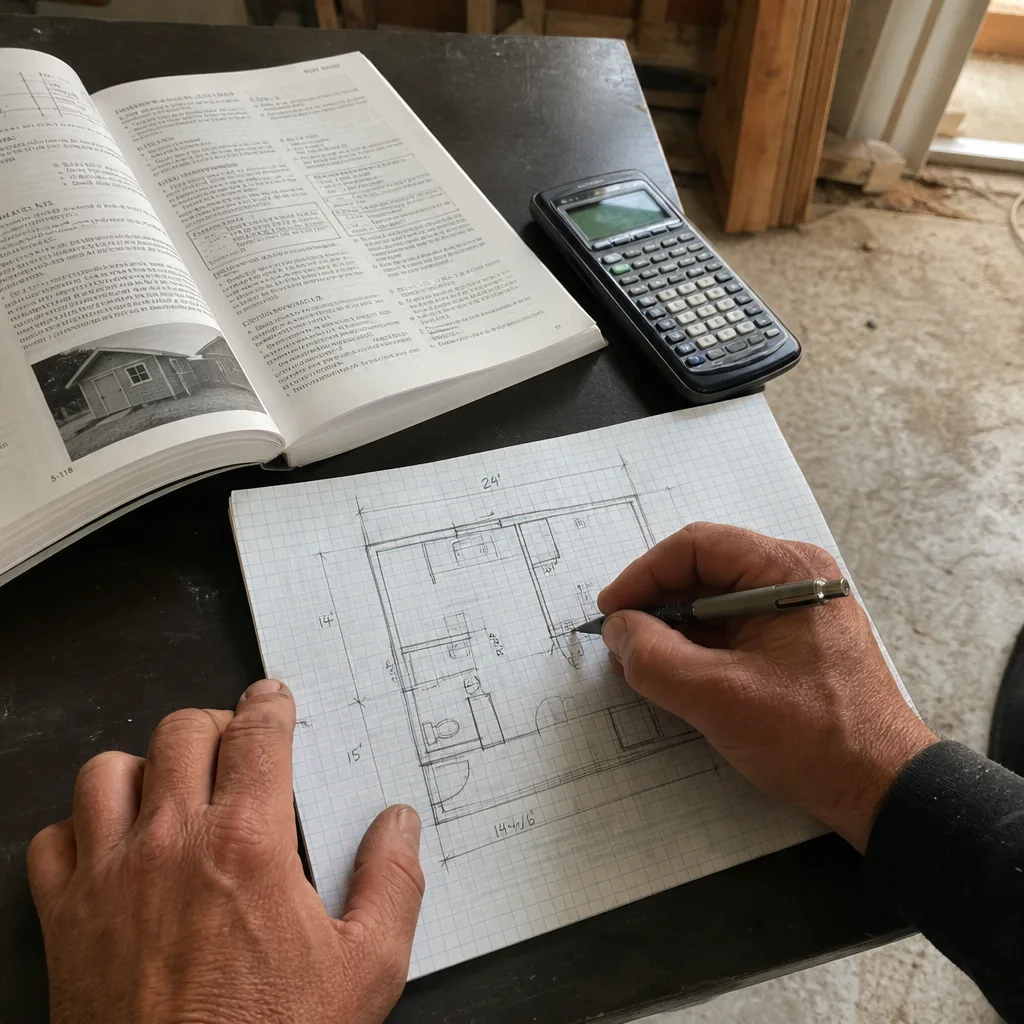
Every ADU we’ve inspected in Camarillo after a heavy December rain shares one trait: the damage started at a joint, a transition, or a penetration that was visually intact in September. The October inspection is not about aesthetics. It’s about finding the five failure points that concentrated winter rain exploits.
1. Deck-to-Wall Flashing
ADU Permits, Codes & Inspections in CA: What You Need to Know covers how Camarillo’s building code requires Z-flashing or membrane flashing where any exterior deck meets the ADU wall. In practice, we see two failure modes in Camarillo ADUs built between 2017 and 2022: the flashing was installed but the top leg was not sealed with compatible sealant (silicone on PVC trim, for instance, which releases in year two), or the deck surface was sloped toward the wall at 1/8 inch per foot instead of the required 1/4 inch per foot. Standing water at the wall line finds any gap.
What to check: Remove a small section of deck board near the wall if accessible, or use a borescope through the rim joist. Look for staining on the sheathing. If you see darkening, the flashing has failed. The repair is $800-$2,400 depending on deck area; the deferred cost is $6,000-$15,000 for sheathing, insulation, and interior drywall.
2. Secondary Drainage Overflow
Primary roof drains and gutters handle normal rain. Camarillo’s December storms - particularly the atmospheric rivers that stalled over Ventura County in 2021 and 2023 - exceed design capacity. Every ADU should have a secondary overflow path, typically a scupper or overflow drain at 2 inches above the primary drain inlet. In Camarillo’s flat-roofed detached ADUs, we’ve found overflow drains painted over or blocked by leaf debris from the adjacent oak canopy common in the Pleasant Valley area.
What to check: Pour 5 gallons of water into the drain area rapidly. If it backs up to the overflow level, verify the overflow path is clear. If the overflow is painted shut or missing, that’s a permit-compliance issue as well as a flood risk.
3. Mini-Split Condensate Line
Camarillo’s winter nights drop to the low 40s. A mini-split condensate line that terminates at grade - rather than draining to a dry well or sewer connection - will freeze and split if the line holds standing water. We’ve replaced three such lines in Camarillo ADUs in the last two years, all in January, all after the owner noticed water staining the exterior stucco.
What to check: Trace the condensate line from the indoor head to termination. If it ends in a gravel bed or planter, verify the line has continuous slope (minimum 1/8 inch per foot) and no low points. Blow through it gently - you should hear air at the far end. If the line is opaque PVC and you cannot verify slope, consider replacing with clear tubing for visual confirmation.
4. Garage-Adjacent Fire Separation Door Sweep
For garage conversion ADUs in Camarillo, the fire separation between living space and garage is code-critical. The self-closing door and its sweep are inspected at final, but the sweep compresses and gaps over 18-24 months of use. A failed sweep does not just leak conditioned air - it violates the fire-rated assembly.
What to check: Close the door on a piece of paper at multiple points. If the paper slides freely, the sweep has lost compression. Replacement sweeps are $15-$40; the fire-assembly re-inspection if a city inspector notices the gap is $400-$800 in permit fees and contractor time.
5. Meter Weatherhead Seal
The weatherhead where electrical service enters the ADU is a common omission in owner maintenance. Camarillo’s Santa Ana winds (covered below) drive rain horizontally; a weatherhead with cracked gasket or missing bushing allows water into the meter base and, in severe cases, the panel. We’ve documented two Camarillo ADUs where this progressed to corrosion in the main breaker.
What to check: Visual inspection from ground level or a stable ladder. The gasket should be pliable and continuous; the bushing should grip the cable firmly with no daylight visible. Do not touch - this is utility-side equipment in many configurations. If you see cracking or gaps, call a licensed electrician.
June Marine Layer Protocol: Crawlspace Ventilation and Mold Prevention
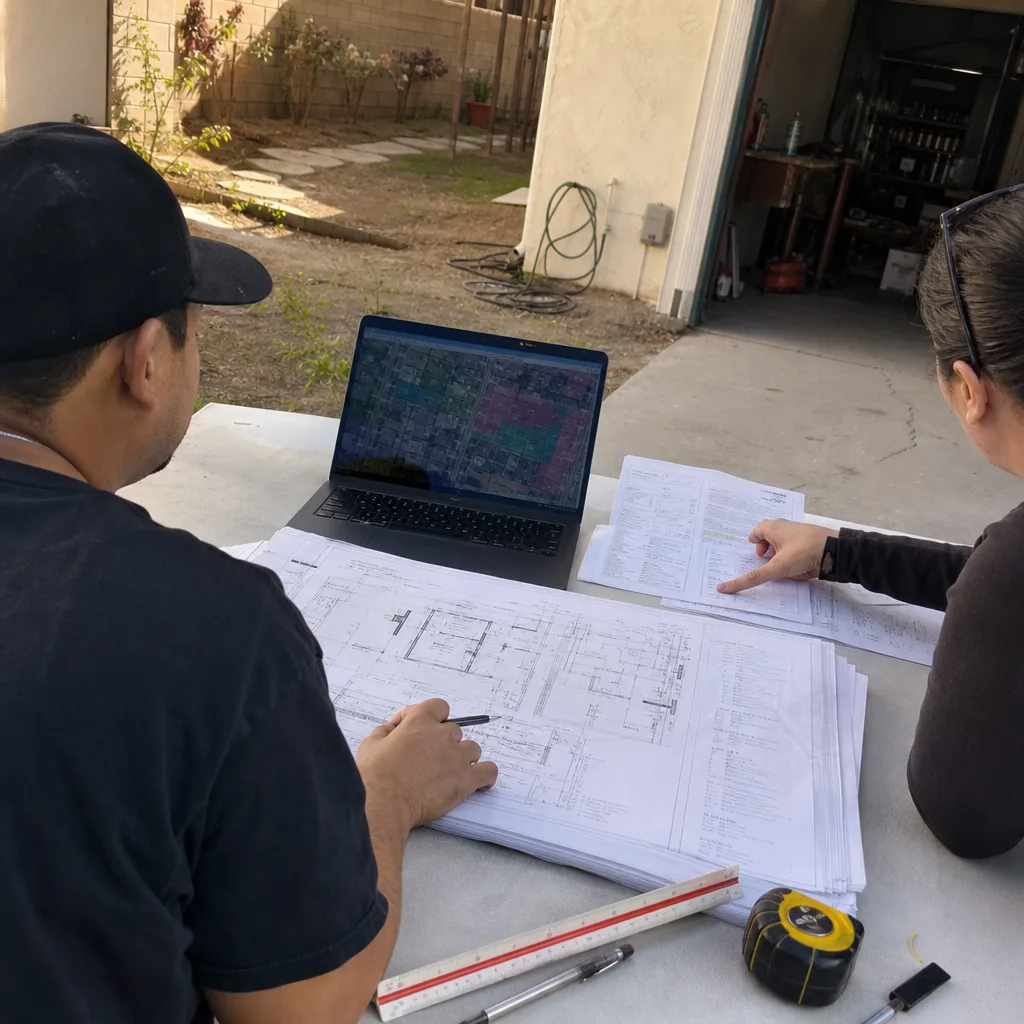
Camarillo’s June marine layer is not a light fog. It is a sustained meteorological event that holds relative humidity above 85% from midnight through mid-morning for 15-20 days each June, with coastal-adjacent neighborhoods like Camarillo Heights experiencing it more intensely than inland areas. An ADU crawlspace with inadequate ventilation will reach 90% relative humidity during these periods, activating mold on organic surfaces within 72 hours.
The standard crawlspace vent calculation in California uses the 1:150 ratio - one square foot of net vent area per 150 square feet of crawlspace floor area. For a sub-1,200 sq ft ADU, this is often interpreted as “minimum code,” but Camarillo’s marine layer demands more. We specify 1:100 for Camarillo ADUs with crawlspaces, and we require cross-ventilation (vents on opposing walls) rather than the single-wall venting that creates dead-air zones.
The June Inspection Routine
- Measure, don’t guess. Place a humidity logger in the crawlspace for the first two weeks of June. Target: sustained readings below 70%. If you see spikes above 80%, the ventilation is inadequate regardless of what the code calculation says.
- Check vapor barrier integrity. The 6-mil polyethylene barrier on the crawlspace floor should be sealed at seams with compatible tape and extend 6 inches up foundation walls. In Camarillo’s adobe-heavy soils, ground moisture is constant; the barrier is your primary defense, not the vents.
- Verify vent screens. Marine layer fog carries salt aerosol from the Pacific, 8 miles away. Metal screens corrode; fiberglass screens clog with dust and salt residue. Clean or replace annually. A blocked 50 sq in. vent is a zero sq in. vent.
- Inspect rim joists and sill plates. These are the first wood members to show mold in a humid crawlspace. Look for black or green staining, or a musty odor that persists after ventilation improvement. Early-stage mold on bare wood is remediable for $800-$1,500; framed-in mold behind insulation is $4,000-$8,000.
For ADUs built on slab - increasingly common in new detached ADU construction in Camarillo - the marine layer risk shifts to the wall base and any stem-wall penetrations. Verify that the sill plate gasket is visible and intact at the slab edge, and that exterior grade slopes away from the ADU at 6 inches in the first 10 feet.
Santa Ana Wind Season: Roof, Attic, and Egress Safety
Camarillo’s Santa Ana wind events peak in September and October, with sustained winds of 25-35 mph and gusts to 60+ mph. These are not hurricane-force winds, but they are dry, persistent, and directional - they test every fastener and seal that was installed in calm weather. The September inspection is timed before the first event, not after the first failure.
Roof Fastener Inspection Cadence
Comp shingle roofs in Camarillo should be inspected every two years for fastener uplift; tile roofs every three years. The Santa Ana winds exploit any fastener that was under-driven, over-driven (fracturing the shingle), or installed in a location that missed the deck. We’ve documented tile displacement in Camarillo ADUs where the nail was driven through the tile’s water channel rather than the raised lug - a 1/4-inch positioning error that becomes a $3,000-$7,000 repair when 15 tiles slide in a single wind event.
What to check: From ground level or a stable ladder, scan for lifted shingle tabs, displaced tiles, or exposed underlayment. Do not walk the roof - the inspection is visual, and walking tile risks breakage. If you see displacement, the repair requires a roofer who understands the original fastening pattern. For ADUs with permit documentation, the fastening schedule is in the approved plans - a detail most homeowners never receive, but which we include in every Ellery permit set.
Attic Ventilation Screen Clearing
Santa Ana winds carry dust, pollen, and seed material from the Santa Monica Mountains and the Oxnard Plain. Attic vents - ridge vents, gable vents, and soffit vents - clog over 12-18 months. A clogged ridge vent in a Camarillo ADU attic creates a heat trap: summer attic temperatures reach 140°F, accelerating shingle degradation and increasing cooling load by 15-20%.
What to check: Visually inspect soffit vents from ground level; use a flashlight for gable vents. Ridge vents require ladder access or a pole camera. Look for visible debris matting or reduced airflow (hold a tissue near a soffit vent - it should draw inward). Clean with a soft brush and vacuum; do not pressure-wash, which drives water past the vent membrane.
Egress Window Hardware Test
Every bedroom in a Camarillo ADU requires an egress window or door per CBC Section 1030. The hardware - typically a sash release or hinge mechanism - must operate with minimal force and no tool requirement. Santa Ana winds deposit grit in tracks and hinges; we’ve found three Camarillo ADU egress windows where the sash release required a screwdriver to operate, which is a code violation and a life-safety hazard.
What to check: Open and close every egress window from inside, using only the hardware provided. Time the operation - it should release and open fully in under 5 seconds. Lubricate tracks with silicone spray, not oil-based lubricants that attract dust. If the mechanism binds, replace it; egress hardware is $30-$80, and the replacement is a 10-minute task.
This test doubles as your annual fire-safety compliance check. California landlords must maintain egress paths per Health and Safety Code 17922; a documented annual test satisfies due diligence if habitability is ever questioned.
The Annual Systems Log: California Habitability Compliance
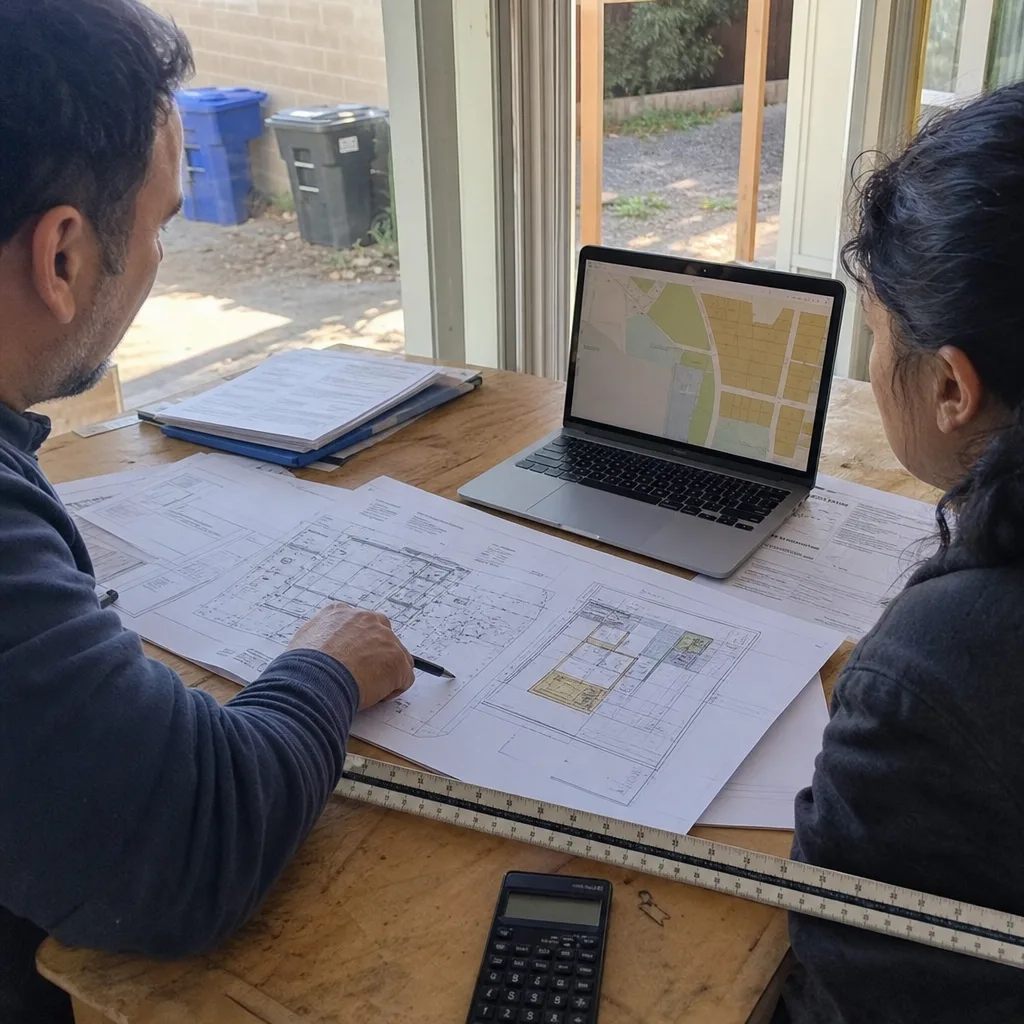
California Civil Code 1941 defines minimum standards for habitability: effective waterproofing, plumbing, heating, sanitation, electrical, and structural safety. For Camarillo ADU owners who rent - whether to long-term tenants or through short-term platforms - maintaining a systems log is not best practice; it is the first document a plaintiff’s attorney requests in a habitability claim.
We’ve reviewed discovery requests in three Ventura County habitability cases since 2022. In each, the attorney asked for: (1) all maintenance records for the dwelling, (2) all communications with tenants about repairs, and (3) all permits and inspections for modifications. The owners who had a systems log with dated entries, photo documentation, and contractor invoices resolved claims quickly. Those who did not faced extended litigation and settlement costs.
What the Log Should Contain
- Date-stamped exterior inspection with photo of each of the five October checklist items, even if no defect was found. “No defect found” is a valid entry.
- HVAC filter changes with filter MERV rating and airflow direction photo. Mini-split filters should be cleaned every 90 days in Camarillo’s dusty summer conditions; replaced annually if degraded.
- Water heater flush and anode check with photo of discharge water clarity. Camarillo’s water hardness is 18-22 grains per gallon - moderately hard - and anode rods degrade in 3-5 years.
- Smoke and CO detector test with photo of test button activation and date on detector label. Detectors have 10-year life; log the install date.
- Pest inspection with photo of foundation perimeter, attic entry points, and any evidence of rodent or insect activity. Camarillo’s suburban interface with open space creates sustained pressure from roof rats and Argentine ants.
Store the log in cloud format with automatic backup. A binder on a shelf is discoverable but not durable; we’ve seen water-damaged and fire-damaged logs that were the owner’s only copy.
The Haven Standard requires a documented photo record on every visit - this is the model we apply to our own work, and we recommend the same discipline for owner maintenance. Under Clause 5 (No Surprises), the scope is locked at signing; the systems log extends that transparency to the operational life of the ADU.
How Deferred Maintenance Voids ADU Warranties
Manufacturer warranties on ADU components are not unconditional. They contain maintenance exclusions that are routinely ignored until a claim is denied. We’ve compiled the critical maintenance requirements for systems common in Camarillo ADU construction.
Mini-Split Systems
Major manufacturers - Mitsubishi, Daikin, Fujitsu - require filter cleaning every 90 days of operation and annual deep cleaning of the indoor coil. The warranty language typically states: “Damage caused by lack of maintenance, including but not limited to clogged filters and contaminated coils, is not covered.” In Camarillo’s dusty Santa Ana environment, a clogged filter in month four can cause compressor overwork and failure in month eight. The compressor replacement is $2,500-$4,500; the denied warranty claim leaves the owner with the full cost.
Additional requirement: The outdoor unit must have 12 inches minimum clearance on all sides and 48 inches above. Camarillo ADU owners sometimes install privacy screens or plant hedges that encroach; this voids warranty coverage for condenser damage.
Tankless Water Heaters
Rinnai, Noritz, and Navien require annual descaling in hard-water areas. Camarillo’s 18-22 gpg hardness exceeds the threshold where manufacturers recommend annual service. The descaling procedure uses a pump and vinegar or commercial descaler; it takes 45 minutes. Deferred descaling causes heat exchanger scaling, reduced flow, and eventual failure. Warranty exclusions explicitly cite “scale damage due to water conditions without annual maintenance.”
We’ve replaced two tankless units in Camarillo ADUs where the owner had never descaled in four years. Both were denied warranty coverage; the replacement cost was $3,200-$4,800 including installation.
Engineered Wood Siding
LP SmartSide and similar products require repainting or restaining at 5-7 year intervals in Camarillo’s UV exposure, and caulk inspection at all joints annually. The warranty requires “proper maintenance including painting, caulking, and prompt repair of damage.” We’ve seen Camarillo ADUs where caulk failure at a window head allowed water behind the siding; the resulting delamination was denied as “improper maintenance” despite the product being correctly installed.
The 365-Day Done Right Promise from Ellery covers our installation and our specification. It does not extend to manufacturer warranties that are voided by owner-deferred maintenance. We document the maintenance requirements at project closeout for this reason.
What Seasonal ADU Maintenance Costs in Camarillo
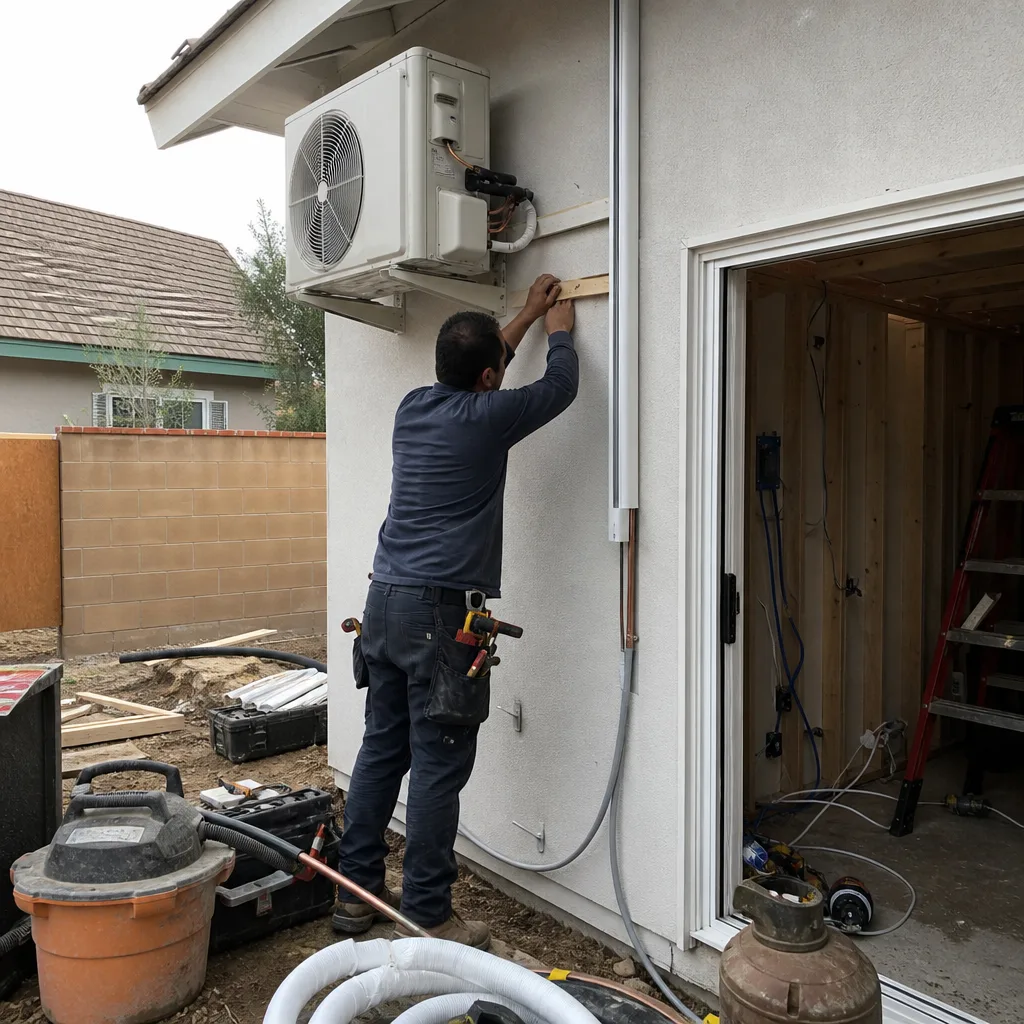
These ranges reflect Camarillo market rates for licensed and insured trade professionals, not handyman pricing. We quote every project with a written price before work starts, per Haven Standard Clause 1; these ranges are for owner budgeting, not a specific quote.
| Maintenance Task | DIY-Eligible | Professional Cost Range | Deferred Failure Cost |
|---|---|---|---|
| October exterior inspection (five points) | Yes - visual only | $150-$300 if contracted | $6,000-$23,000 (moisture damage) |
| Caulk replacement, window/door heads | Yes - if accessible | $200-$600 | $3,000-$8,000 (sheathing repair) |
| Mini-split filter cleaning (quarterly) | Yes | $80-$150 per visit | $2,500-$4,500 (compressor) |
| Mini-split annual service | No - refrigerant handling | $250-$400 | Warranty void + compressor failure |
| Tankless descaling | Yes - with pump kit | $200-$350 | $3,200-$4,800 (replacement) |
| Crawlspace humidity assessment | Partial - logger placement | $300-$500 | $4,000-$8,000 (mold remediation) |
| Roof fastener inspection | No - fall hazard | $200-$400 | $3,000-$7,000 (tile repair + interior) |
| Egress window hardware replacement | Yes | $80-$150 | Liability exposure (habitability claim) |
| Annual systems log documentation | Yes | N/A - owner task | Legal defense costs (habitability litigation) |
Annual preventive maintenance budget for a typical Camarillo ADU: $400-$800 if owner-performed where eligible, $1,200-$2,000 if fully contracted. See our ADU Cost Breakdown: The Camarillo Homeowner’s Reference for 2026 for detailed pricing context. The professional route includes documentation that supports warranty claims and habitability defense.
Special Notes for Prefab and Modular ADUs
Prefab and modular ADUs - including systems from Dvele, Mighty Buildings, Boxabl, Plant Prefab, and others we specify - have maintenance profiles that differ from site-built construction. The differences matter for seasonal care in Camarillo.
Dvele units ship with integrated mechanical systems and smart-home monitoring. The monitoring platform alerts to filter status and HVAC anomalies, but it does not replace physical inspection of roof penetrations, window flashings, and deck connections. We coordinate Dvele installation in Camarillo with a site-specific inspection protocol that supplements the manufacturer’s general guidance.
Mighty Buildings uses a proprietary composite panel system that is moisture-resistant but not maintenance-free. The panel joints require sealant inspection at the same October interval as conventional construction; the difference is that panel movement is more constrained, so sealant fatigue shows as cracking rather than gap opening.
Boxabl units are steel-framed with specific fastener torque requirements that thermal cycling affects. The Camarillo temperature swing - 45°F winter nights to 95°F summer days - creates expansion-contraction cycles that loosen bolted connections over 18-24 months. A torque check at the 18-month mark is prudent, particularly at the module-to-module connections in multi-unit configurations.
Plant Prefab and other panelized systems use conventional materials in factory-controlled conditions, which reduces installation variance but not maintenance requirements. The seasonal protocol for a Plant Prefab ADU in Camarillo is identical to site-built - the advantage is that the as-built condition is closer to the design intent, so baseline performance is more predictable.
For any prefab or modular ADU, maintain the manufacturer’s specific maintenance schedule in addition to this seasonal guide, and explore more guides & resources on ADU ownership. The manufacturer’s warranty takes precedence; our seasonal protocol fills gaps that manufacturer guidance often omits, particularly around site-specific drainage and local climate exposure.
Common Mistakes to Avoid
- Waiting for visible damage. By the time Camarillo homeowners see interior staining, the exterior failure has been active for two or three rain seasons. The October inspection prevents the December surprise.
- Using the wrong caulk. Silicone on PVC trim, acrylic latex on wet surfaces, non-UV-stable products on sun exposure - each mismatch fails within 12-18 months. Read the manufacturer’s compatibility statement, or specify the correct product in your maintenance contract.
- Ignoring the marine layer because “it’s just fog.” Camarillo’s June marine layer delivers more sustained moisture than many Midwest summer storms. Crawlspace ventilation designed for dry climates fails here.
- Walking tile roofs. Clay and concrete tiles crack under foot traffic. The inspection is visual from ladder or ground; the repair is not optional if you create the damage.
- Skipping the systems log because “I’m not a landlord.” California habitability law applies to any rental, including short-term stays over 30 days. The log is also evidence in insurance claims and warranty disputes for owner-occupied ADUs.
- Assuming prefab means maintenance-free. Factory precision reduces installation defects, not operational wear. The seasonal protocol still applies.
- Deferring tankless descaling. The $250 annual service prevents the $4,000 replacement. Camarillo’s water hardness makes this non-optional.
When to Call a Professional
Some maintenance tasks carry genuine risk or require trade-specific licensing. Call a licensed professional for: roof work at height, electrical panel or weatherhead work, refrigerant handling in HVAC systems, mold assessment beyond visible surface growth, and any structural repair involving load-bearing elements. For ADU owners who want a documented baseline, Ellery ADU Studio Camarillo offers free estimates in Camarillo - call (805) 301-9518. We provide a written scope and price before any work begins, per Haven Standard Clause 1, and we include the documented photo record that supports your systems log.
Frequently Asked Questions
Owner-performed preventive maintenance on a Camarillo ADU typically runs $400-$800 annually in materials and minor components; fully contracted seasonal service ranges $1,200-$2,000. The critical cost comparison is not maintenance versus nothing - it is $800 preventive versus $8,000-$25,000 for moisture or mechanical failure in years three to five. Call (805) 301-9518 for an exact scope and written price on any maintenance or repair need - estimates are free.
No. Under Haven Standard Clause 1, every Ellery project is quoted with a written price before any work begins. The scope is locked at signing; no door-side upsells, no scope creep. If we find concealed damage during maintenance work, we document it with photos, explain the finding, and provide a separate written quote for the repair before proceeding.
Routine maintenance - filter changes, caulking, cleaning - does not require permits. Repairs that alter structural, electrical, plumbing, or mechanical systems may require permits depending on scope. We pull all required permits for any repair work we perform, and we schedule inspections to final approval. The permit record becomes part of your ADU’s documented history.
Camarillo sits inland enough to experience stronger Santa Ana wind exposure than coastal Ventura, but close enough to receive the full marine layer effect. The temperature swing is wider than Oxnard’s moderated coastal climate. These factors mean Camarillo ADUs need more attention to thermal expansion fasteners and marine-layer ventilation than either neighboring city, while sharing the same concentrated winter rain pattern.
A properly maintained ADU using materials specified for Southern California exposure should deliver 50-60 years of service life for structure, 20-25 years for roof, 15-20 years for HVAC, and 10-15 years for water heating - with component replacement at end of service life, not catastrophic failure. Deferred maintenance compresses these timelines by 30-50% and converts planned replacement into emergency repair.
Yes. We provide maintenance assessment and repair services for ADUs throughout Camarillo regardless of original builder, including a Free Second Opinion on any written estimate already in hand. We bring the same documented photo record and written pricing to maintenance work that we apply to new ADU projects. Call (805) 301-9518 to schedule.
The Bottom Line
Camarillo’s mild climate is not maintenance-free climate. The concentrated winter rain, persistent June marine layer, and periodic Santa Ana winds create specific failure modes that show up in year three and four, not year one. The October pre-rain inspection, June crawlspace protocol, and September wind-season review - documented in an annual systems log - prevent the $8,000-$25,000 failures we’ve seen in deferred-maintenance ADUs across Mission Oaks, Las Posas Estates, and Camarillo Heights. The cost of prevention is $400-$800 annually; the cost of deferral is a multiple of ten, often uncovered when the owner is least prepared to absorb it.
Written by Nadia Ellery, Owner at Ellery ADU Studio Camarillo, serving Camarillo since 2015.