
HOA & Zoning Compliance in Camarillo, CA
HOA and zoning compliance for an ADU in Camarillo means getting two separate approval tracks lined up before a shovel touches the ground: the City of Camarillo’s planning and building requirements, and whatever recorded CC&Rs your homeowners association has on file. Both have teeth. An ADU that clears the city permit office but violates the HOA’s architectural guidelines can trigger fines, forced modifications, or a stop-work order that costs far more to untangle than the compliance work would have. Ellery ADU Studio handles both tracks through our ADU Design & Permitting service as part of a single, written-price contract – no separate design consultant, no separate expediter, no gap between the people drawing the plans and the people building the structure.
If you’re already sorting through HOA letters and city zoning maps and want a straight answer about what your lot can actually support, call (805) 301-9518. A live person answers – not a voicemail queue. For the full picture of how this service fits into our ADU process, visit our ADU Design & Permitting in Camarillo page.
Nadia Ellery founded this studio in 2015, the year California’s ADU laws began their significant shift, and the team has navigated Camarillo’s specific planning requirements, Ventura County overlay zones, and the particular architectural standards common to master-planned HOA communities in the Pleasant Valley corridor ever since. That’s not a general claim – across 900+ ADUs designed, permitted, and built since 2015, a disproportionate share of the early compliance headaches came from exactly this city’s combination of strong HOA governance and a planning department that enforces setback and height rules strictly.
When You Need HOA & Zoning Compliance
Not every ADU project in Camarillo runs into a compliance conflict, but the ones that do tend to surface the problem late – sometimes after drawings are 80% complete or after a contractor has already submitted a permit application with incorrect setback calculations. These are the scenarios where dedicated compliance work pays for itself:
- Your property is in a master-planned HOA community. Neighborhoods like Camarillo Hills, Spanish Hills, and the Villages at Camarillo are governed by recorded CC&Rs that impose architectural controls well beyond what the city requires – specific roofline restrictions, material palettes, and sometimes outright ADU prohibitions that predate SB 9 and AB 68. We pull the governing documents, not just the city zoning map, before anything is drawn.
- You received a denial letter from your HOA’s architectural review committee. HOA ARC denials are often fixable. California Civil Code Section 4751 limits what an HOA can legally prohibit regarding ADUs, and many denial letters cite rules that are no longer enforceable. We read the denial against current state law and advise on whether to appeal, modify the design, or both.
- Your lot is near a ridgeline, creek setback, or scenic corridor. Parts of Camarillo – particularly properties bordering the Conejo Grade side or backing up to open space in the Las Posas Estates area – carry additional Ventura County overlay conditions that interact with city zoning in ways a standard permit application doesn’t capture.
- A previous designer told you the project “should be fine” but couldn’t cite a specific code section. That phrase has preceded more than a few expensive redesigns. We cite the specific section: Camarillo Municipal Code Chapter 19.08 for use definitions, Chapter 19.24 for residential district standards, and the applicable state ADU statutes where local rules conflict.
- You’re converting a garage or adding a detached structure with James Hardie fiber cement siding or a Tuff Shed-based prefab shell. Some Camarillo HOAs specify that accessory structures must match the primary dwelling’s exterior material class. We check the CC&Rs before specifying any cladding, so you don’t finish construction and receive a materials violation notice.
- You’ve had a project stall at the planning counter and don’t know why. Sometimes a permit technician flags a parcel for additional review – a recorded easement, a deed restriction, or a flag lot condition – without explaining what specifically needs to change. We request the plan check comments in writing and respond item by item.
Our HOA & Zoning Compliance Process
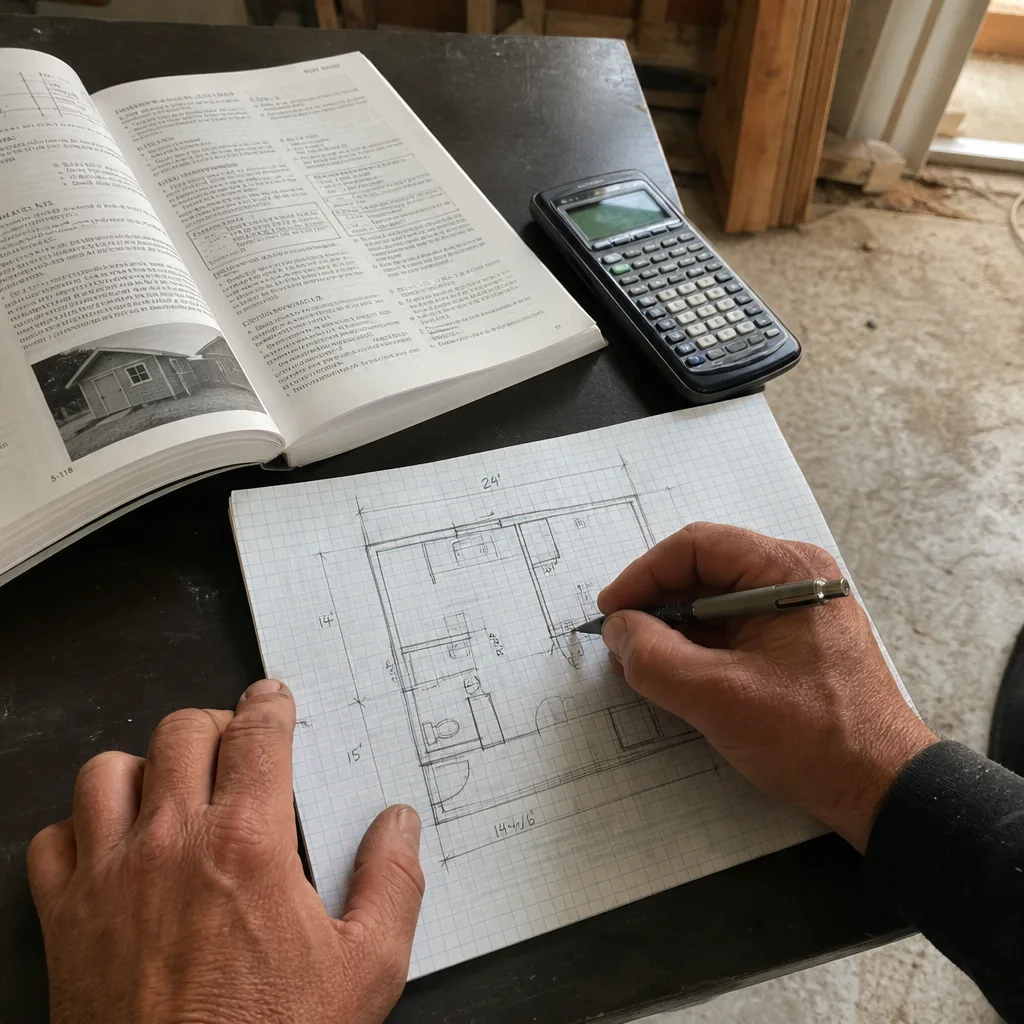
Compliance isn’t a checklist you run through once. It’s a sequence of document pulls, code lookups, and written submissions that build on each other. Here’s how we handle it:
- Title and CC&R Review. Before any design work begins, we pull the recorded CC&Rs, any recorded plat restrictions, and the HOA’s current architectural standards (which are sometimes separate from the CC&Rs and updated more recently). We flag every provision that touches ADUs, accessory structures, setbacks, height, exterior materials, and parking. This review is completed before the first site sketch is drawn – it’s the document that tells us what design parameters we’re actually working within.
- City Zoning and Parcel Verification. We pull the parcel’s zoning classification, confirm the applicable residential district standards under the Camarillo Municipal Code, check for any conditional use permits or variances already recorded on the parcel, and map the actual setback envelope against the as-built survey. In Camarillo, the minimum rear setback for a detached ADU is generally four feet under state law, but some parcels carry recorded conditions that are more restrictive. We find those before they find us.
- Conflict Identification and Written Summary. If the CC&Rs and city zoning are aligned, we document that and move to design. If there’s a conflict – for example, an HOA rule that appears to prohibit detached ADUs but that conflicts with Civil Code 4751 – we prepare a written summary of the conflict, cite the controlling authority, and advise on the path forward. You receive this in writing, with the specific code citations, not a verbal summary of what we think the HOA “probably” meant.
- ARC Package Preparation and Submission. For properties subject to HOA architectural review, we prepare the full ARC submission package: site plan, elevation drawings, material specifications, and a written compliance narrative that addresses each provision of the CC&Rs the project must satisfy. We write the narrative to pre-empt the most common ARC objections, because an ARC that has all its questions answered in the submission moves faster than one that has to issue a request for additional information.
- City Permit Set Coordination. The HOA ARC approval and the city building permit are separate processes that run on different timelines. We coordinate both so that the permit set submitted to the City of Camarillo Building Division reflects any design conditions the ARC attached to its approval. A permit set that doesn’t match the ARC-approved drawings creates a second round of corrections. We prevent that by treating both approvals as a single document set.
- Response to Comments and Final Clearance. Plan check comments from the city, and clarification requests from the ARC, are addressed in writing with specific responses to each item. We track both processes until you have a city-issued permit and, where applicable, written ARC approval in hand. At that point, construction can begin under the same single contract – no handoff between a designer who’s done and a builder who wasn’t in the room when the decisions were made.
HOA & Zoning Compliance Pricing in Camarillo
HOA and zoning compliance in Camarillo is priced as part of Ellery ADU Studio’s full design-build contract, not billed separately as an add-on after you’ve already committed to a project. That said, the compliance scope varies enough by parcel that the range is real and worth understanding before you call.
Per Haven Standard Clause 1, every project at Ellery receives a written price before any work begins. The numbers below reflect what compliance-related work typically adds to the overall project cost, based on actual Camarillo projects since 2015.
- Standard parcel with no HOA: Zoning verification, setback confirmation, and permit set coordination are included in the base design-build fee. No separate compliance line item.
- HOA property requiring ARC submission and approval: Typically adds $1,800 to $3,200 to the project scope, covering document review, ARC package preparation, submission, and response to comments. Projects in communities with detailed architectural standards – such as those in Spanish Hills or the gated portions of Camarillo Hills – tend toward the higher end of that range.
- Properties with recorded deed restrictions, easements, or conditional use permits: If a recorded condition requires a variance application or a formal planning department review beyond standard plan check, that scope is quoted separately and in writing before it begins. Variance applications in Camarillo typically involve a $500 to $1,500 city filing fee, plus our preparation time, which we quote specifically per project.
- ARC appeal (if initial submission is denied): If an HOA ARC issues a denial that we believe conflicts with Civil Code 4751 or other state law, we prepare the appeal response. That work is quoted in writing before we proceed – it typically runs $900 to $1,800 depending on the complexity of the denial letter and whether a formal HOA board hearing is required.
What affects cost most in Camarillo specifically: the age of the CC&Rs (older documents from the 1980s and early 1990s are more likely to contain ADU-restrictive language that conflicts with current state law, requiring more careful legal analysis before appeal), the completeness of the HOA’s current architectural standards, and whether the parcel has any recorded conditions from a prior subdivision approval.
If you have a written estimate from another designer or permit expediter, we’ll review it at no charge. That’s the Free Second Opinion – not a sales call, a straight read of whether the scope and price reflect what the Camarillo process actually requires.
FAQs – HOA & Zoning Compliance in Camarillo
Can my Camarillo HOA legally block my ADU?
California Civil Code Section 4751 prohibits HOAs from enforcing CC&R provisions that ban or effectively prohibit ADUs on single-family lots. That statute has been in effect since 2020 and was strengthened in subsequent legislative sessions. So the short answer is: no, a blanket prohibition is not enforceable. However, HOAs in Camarillo can still regulate design elements – setback from the main structure, roof pitch, exterior materials, and landscaping screening – as long as those regulations don’t make the ADU effectively infeasible. The practical implication is that a denial letter from your ARC is often the beginning of a negotiation, not the end of the project. If you’ve received a denial, call (805) 301-9518 and we’ll read it against the current statute before advising on next steps.
How long does HOA architectural review take in Camarillo?
Most Camarillo HOA architectural review committees are required by their own governing documents to respond within 45 to 60 days of a complete submission. In practice, well-prepared submissions that address all the CC&R provisions upfront tend to receive decisions in 30 to 45 days. Incomplete submissions – missing elevations, material callouts, or a compliance narrative – routinely trigger requests for more information that reset the clock. The ARC package we prepare is designed to be complete on first submission, because a second submission cycle adds six to eight weeks to the overall project timeline. City permit review runs concurrently; we coordinate both tracks so the overall schedule doesn’t compound unnecessarily.
Does HOA approval mean the city will approve the permit automatically?
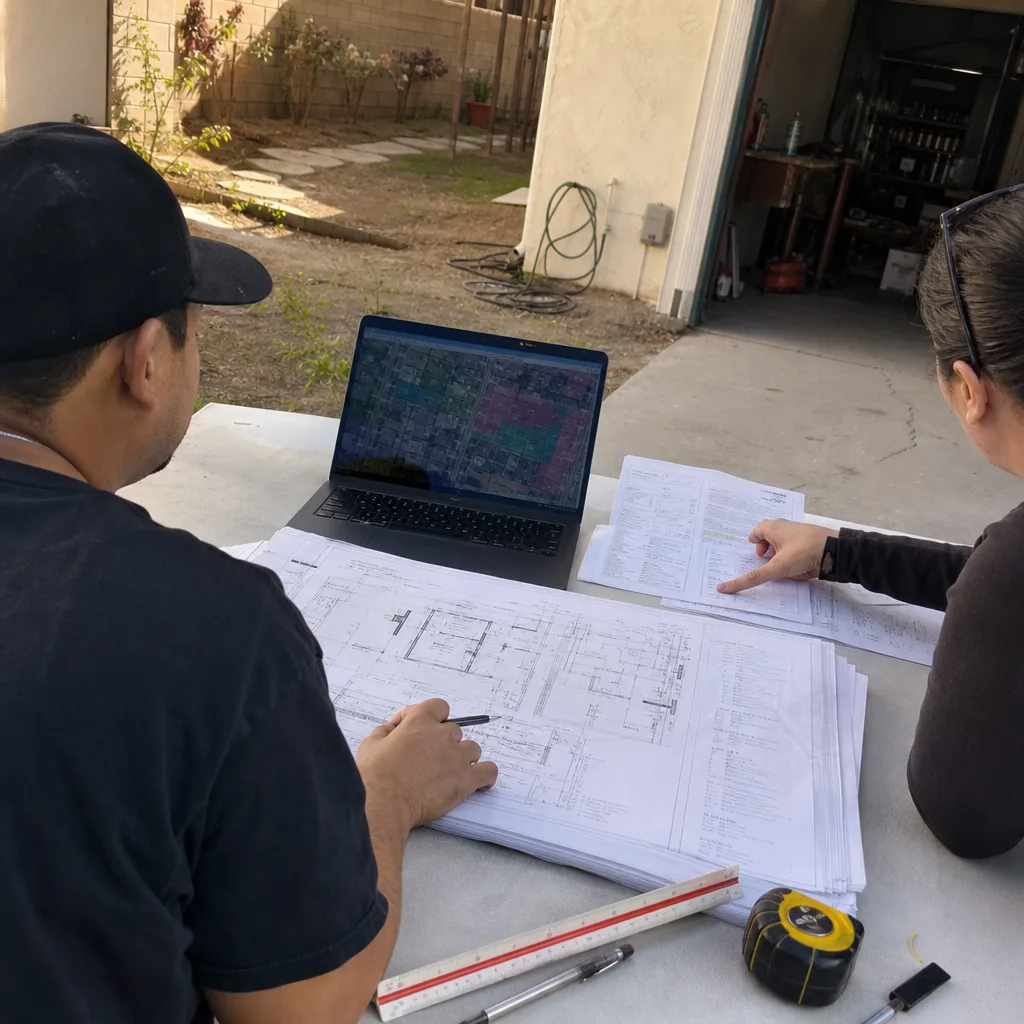
No – and this is one of the most common misconceptions among Camarillo homeowners starting an ADU project. HOA approval and city building permit approval are entirely separate processes governed by different bodies under different rules. An ARC approval means the design satisfies the CC&Rs; it has no bearing on whether the project meets the Camarillo Municipal Code, state fire codes, or the California Residential Code. Conversely, a city building permit says nothing about HOA compliance. Both approvals are required, and the permit set submitted to the city must reflect any design conditions attached to the ARC approval. That’s why we handle both under one contract: disconnected processes produce disconnected documents, which produce costly corrections.
What if my lot has a recorded easement that limits where I can build the ADU?
Recorded easements – utility easements, drainage easements, or access easements from a prior subdivision – can meaningfully constrain the buildable envelope on a Camarillo parcel, sometimes more than the standard setback rules. We identify all recorded easements during our site assessment and title and zoning review at the start of the project, before the site plan is drawn. If an easement conflicts with the intended ADU placement, we document the conflict in writing and present the design options that work within the actual buildable area. In some cases, a recorded easement can be relocated or partially vacated through a formal process with Ventura County or the relevant utility – that’s a separate scope item, quoted in writing, before it starts. The point is you find out in week one, not after the foundation is poured. Call (805) 301-9518 if you have a parcel with a known easement and want to understand what it means for your ADU placement.
Key Takeaways
- HOA compliance and city zoning approval are separate processes in Camarillo. Both are required, and neither substitutes for the other.
- California Civil Code Section 4751 limits what an HOA can prohibit – a blanket ADU ban in older CC&Rs is generally not enforceable under current state law.
- HOA ARC submissions in Camarillo take 30 to 60 days; a complete first submission is the most reliable way to avoid a second cycle.
- Compliance work at Ellery ADU Studio is priced in writing before it begins – per Haven Standard Clause 1, there are no surprise line items added after you’ve committed.
- The 365-Day Done Right Promise means that if the finished ADU isn’t built to the permitted and ARC-approved drawings, we make it right. That commitment is in writing before the project starts.
- If you have a written estimate from another firm, we’ll review it for free – a straight read of whether the compliance scope and pricing reflect what Camarillo actually requires.
Nadia Ellery and the team at Ellery ADU Studio have navigated Camarillo’s HOA and zoning landscape on hundreds of projects since 2015. If you’re at the beginning of the process or stuck somewhere in the middle, the place to start is a conversation – not a form, not a voicemail. Call (805) 301-9518 and talk to a live person who can tell you, in plain language, what your specific parcel and HOA situation actually means for your ADU project. For the full scope of home ADU services Ellery offers, including the complete design-build contract structure, start with the overview and then get into the specifics.
Written by Nadia Ellery, Owner at Ellery ADU Studio Camarillo, serving Camarillo since 2015.